KP ME
How might we help people live longer healthier lives
KPME
Client: KP
Duration: 7 Months
Project Overview
The Team
2 Directors
1 Lead IxD Designer (me!)
1 Lead Researcher
1 IxD Designer
2 Visual Designers
4 Business Analyst
My Role
My responsibilities ranged from managing client relationship to leading the execution of several design tracks through preparation and delivery. I managed 3 Junior designers throughout the engagement, supporting and establishing processes to maximize team’s strengths, trust, and interests.
Personal Accomplishments
Led the discovery and synthesis for the user research portion
Defined Mindsets
Facilitated over 10 co-creation workshop sessions with the client (avg. 15 participants)
Defined interaction modal of the KP ME app
Created the microsite showcasing the user journeys
Managed team by dividing tasks and creating check-in rituals for alignment and visibility
Personal behavior is the #1 factor influencing health outcomes
Personal behavior outweighs genetics, medical care, and social determinants of health in influencing health outcomes.
As a trusted health partner, KP can extend its influence beyond medical care (10%), and environmental and social determinants of health (20%), into helping people with personal behaviors (40%) and improving total health care.
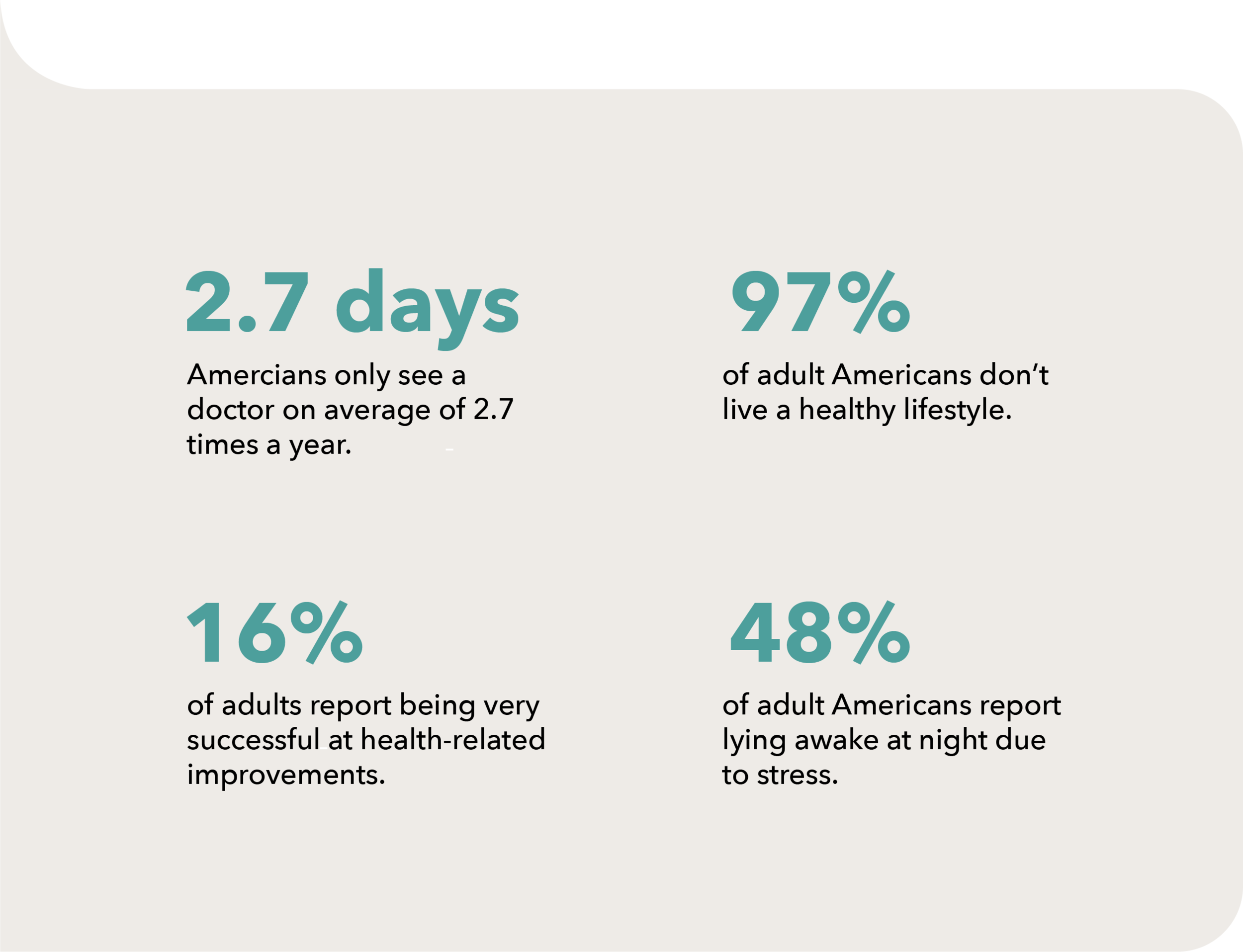
We’re a nation of stressed out, sleepless, sedentary, food-confused, and isolated people in need of help, but we’re not equipped to make sustained changes to improve our health and wellness.
We want help but don’t know where to go, who to trust, or how to cut through the noise. And the precious few minutes per year we spend with our doctors can’t possibly meet our needs.
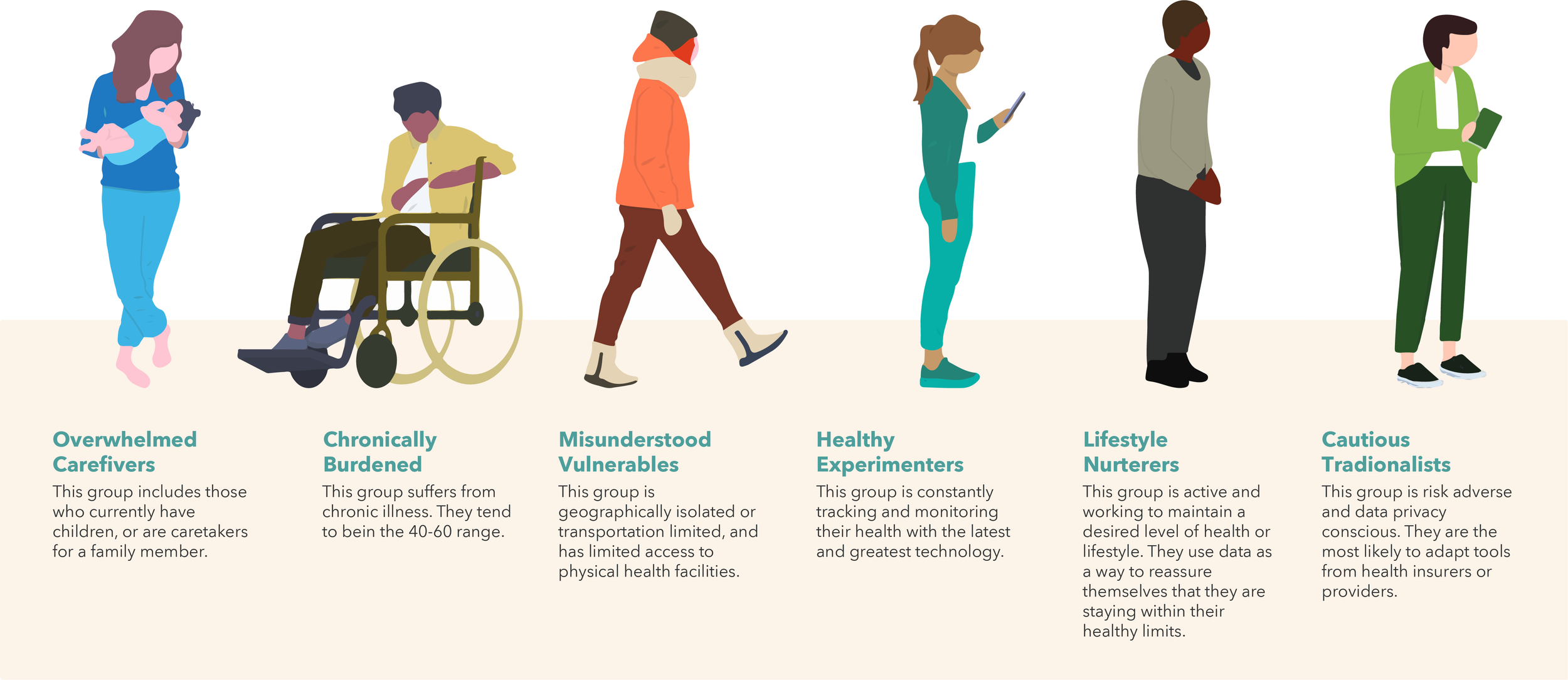
Who are these American adults?
This project originally started through an accelerator program between FJORD and Kaiser Permanente defining archetypes that best represent the market demographic. Our team picked up on this archetypes to guide our user research, validate assumptions, and uncover opportunities.
People first, health condition second
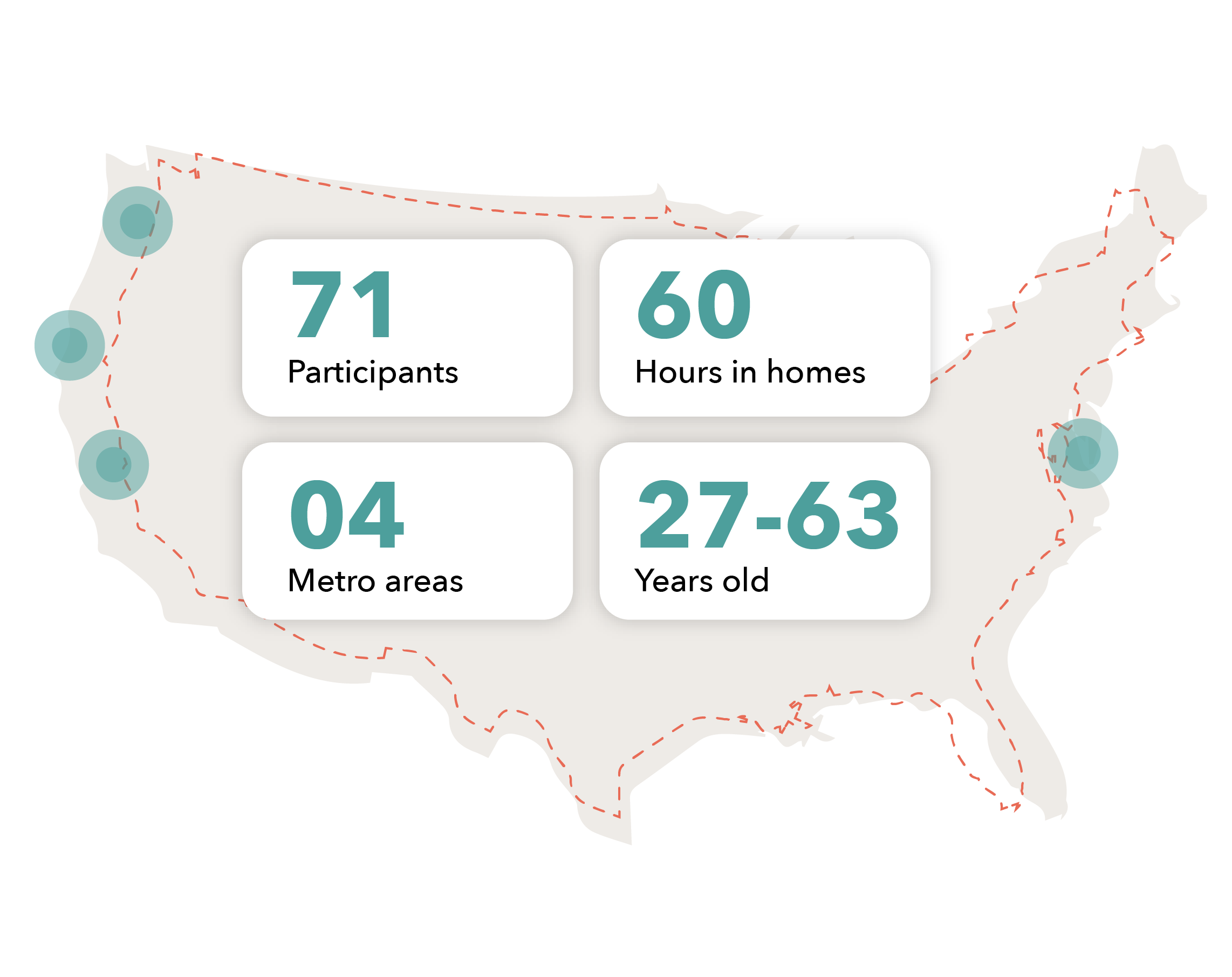
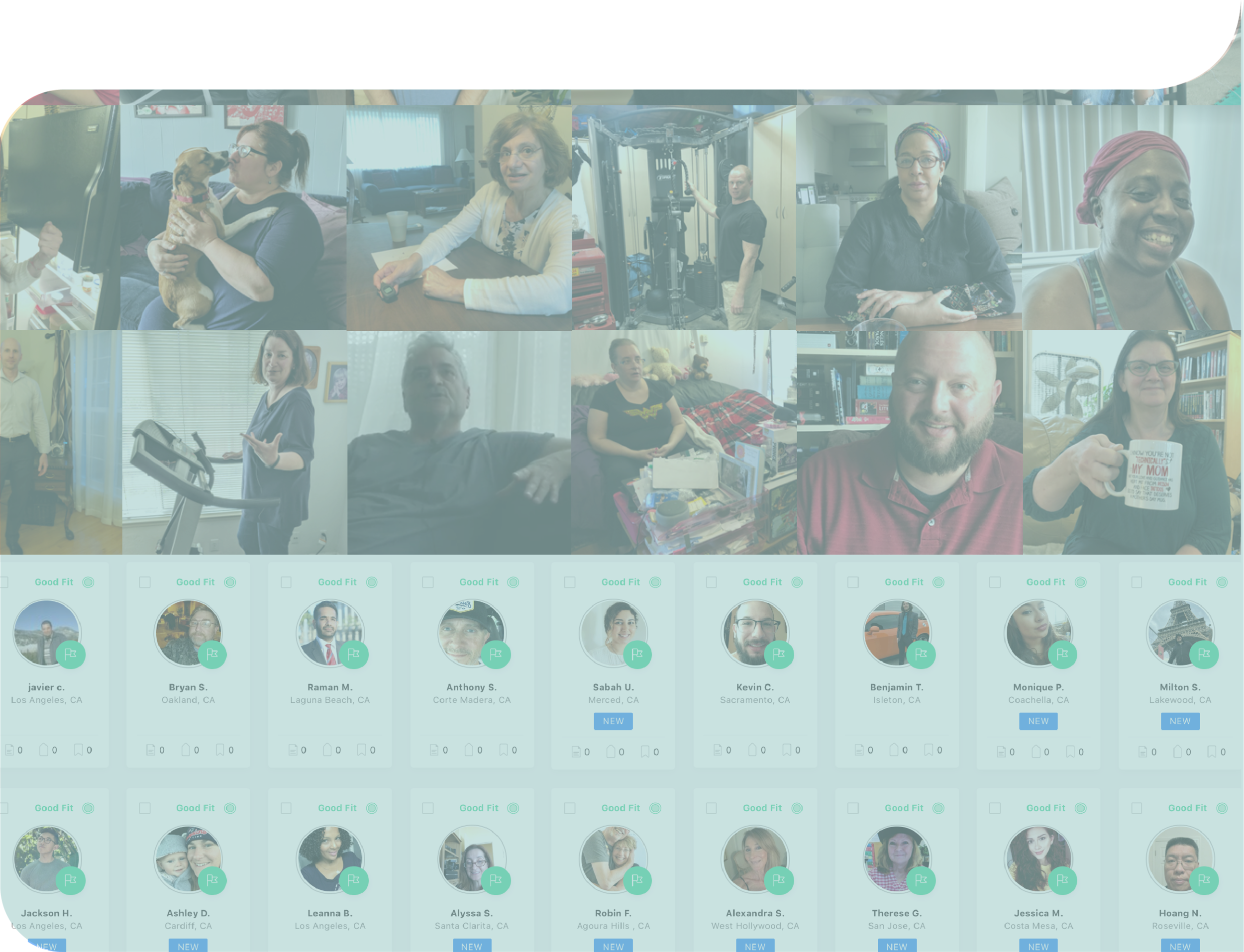
To validate and refine the six working archetypes from the Accelerator, we went to representatives of those archetypes and conducted 24in-home interviews and a longitudinal 4-6 day online diary study with 47 participants (some in-home interview participants also completed the diary study).
We studied people representing the six archetypes, spread out across four metro areas: San Francisco, Los Angeles, Seattle, and Washington, D.C. We interviewed each participant in the comfort of their home to observe how their home environment impacted their health.
After each participant’s session we catalogued the current behavior change techniques they use, or would be highly likely to use based on their current preferences. Concurrently, we ran a diary study through Dscout, a research platform. Participants had 4-7 days to discuss their goal and complete daily reflections on their progress
Our goal
Learn how they define personal health
Refine the 6 Archetypes from the Accelerator
Learn what they need in a service like KP ME
Learn how they make a personal health decision
See what currently helps them from healthy habits
Learn what influences their personal health decisions
Insights
Mindset Matter
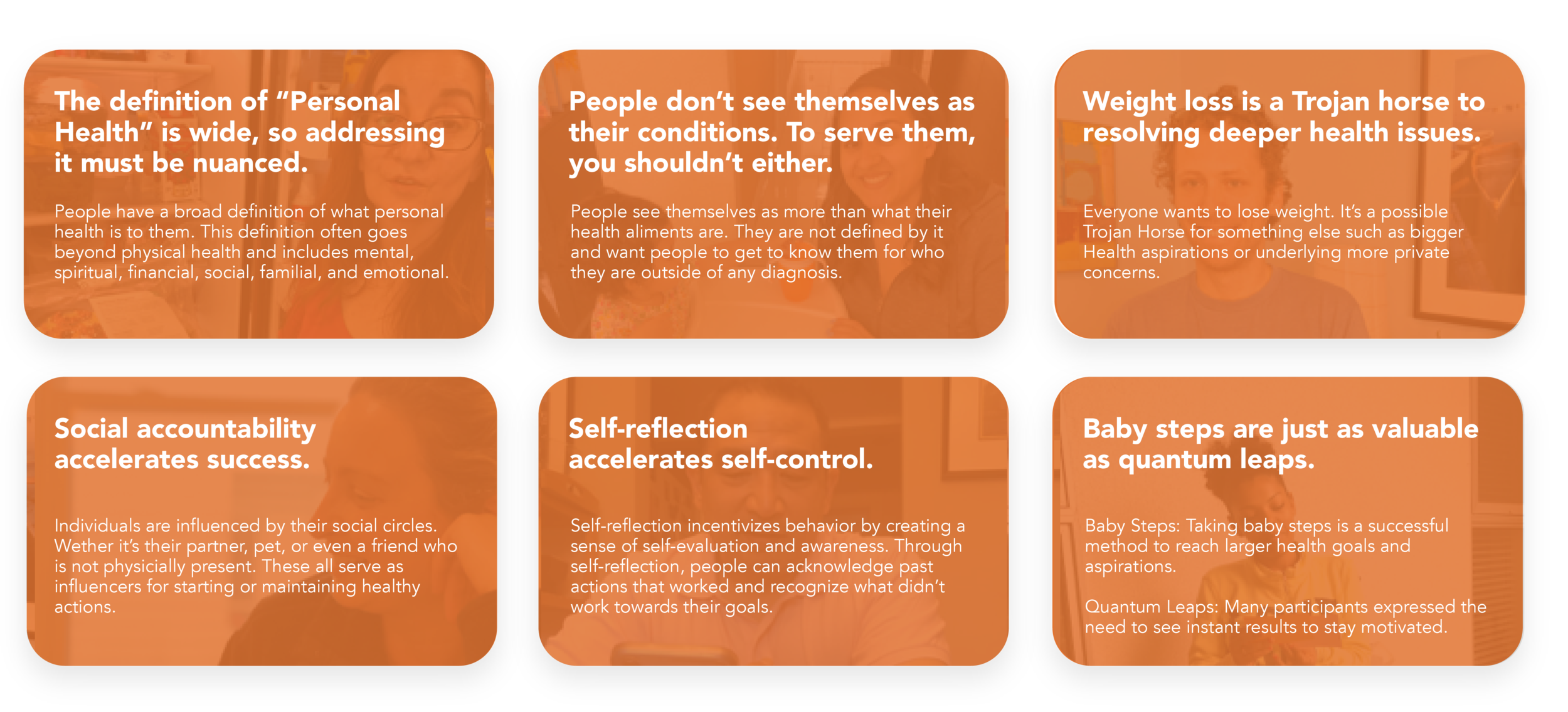
Our primary research highlighted the importance of a person’s mindset in how they approached their personal health decisions each day. KP ME can cater to varying mindsets (attitudes, beliefs, or even moods) to better encourage healthy decision-making. The predominant factor in why a participant made a decision was not their demographics (archetype) but their mindset at the time they made their decision.
While people’s mindsets are fluid and can change moment by moment, our research suggests their ‘base mindset’ persists for months or even years. Mindsets group people together based on their motivations, attitudes and behaviors. These personal health mindsets help us understand the differences in peoples’ approaches to their personal health care decisions and give us reference points to better support the users of KP ME.
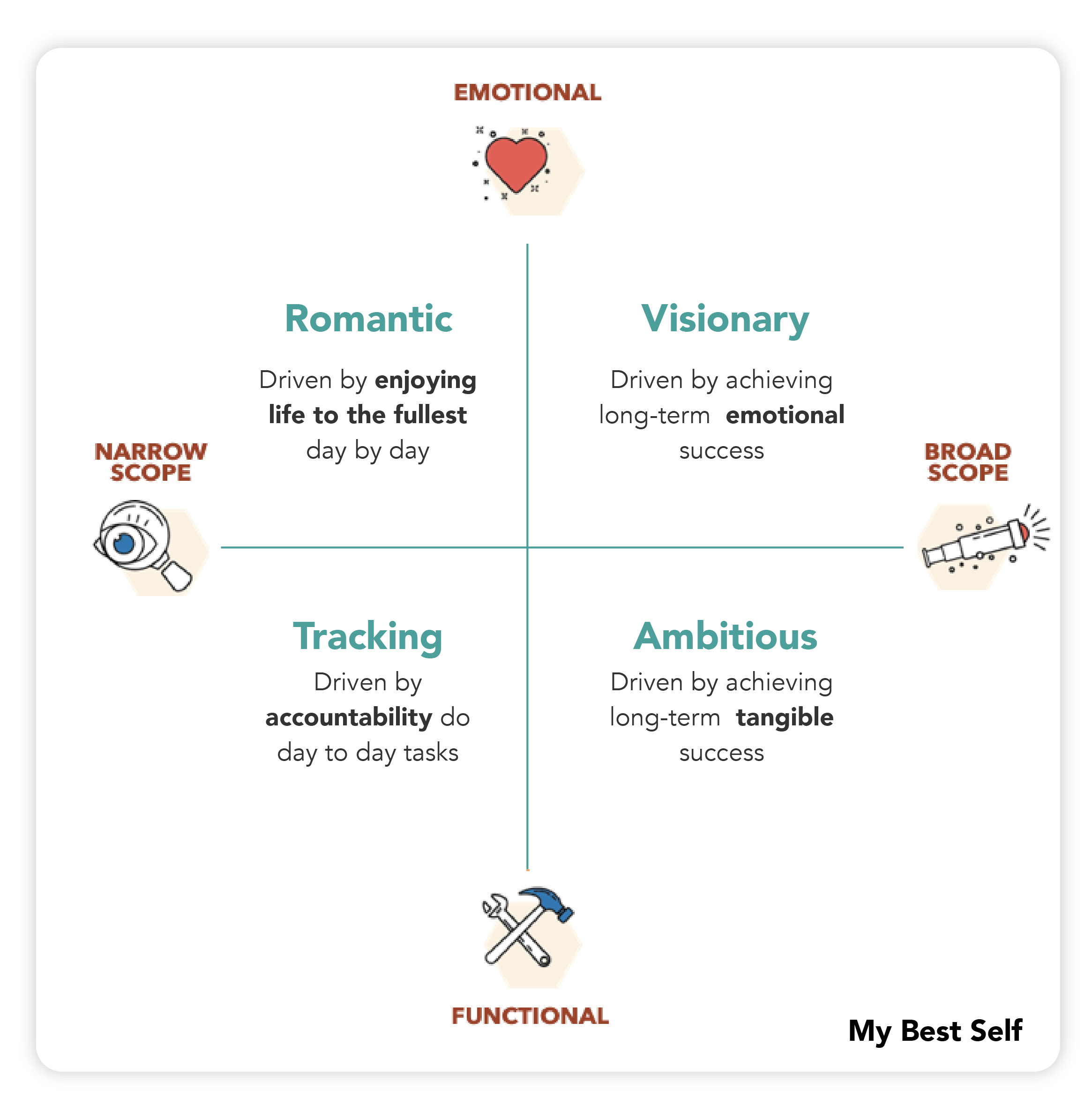
“My Best Self” Mindsets
Represents the four mindsets that people are in when their behaviors align with their health care goals in a way that productively support their wellbeing. People in the “Best Self” mindset tend to be more optimistic, more self-forgiving, and have well developed tools (physical, digital), support networks (in-person, virtual), and strategies or coping mechanisms to keep living their best lives.
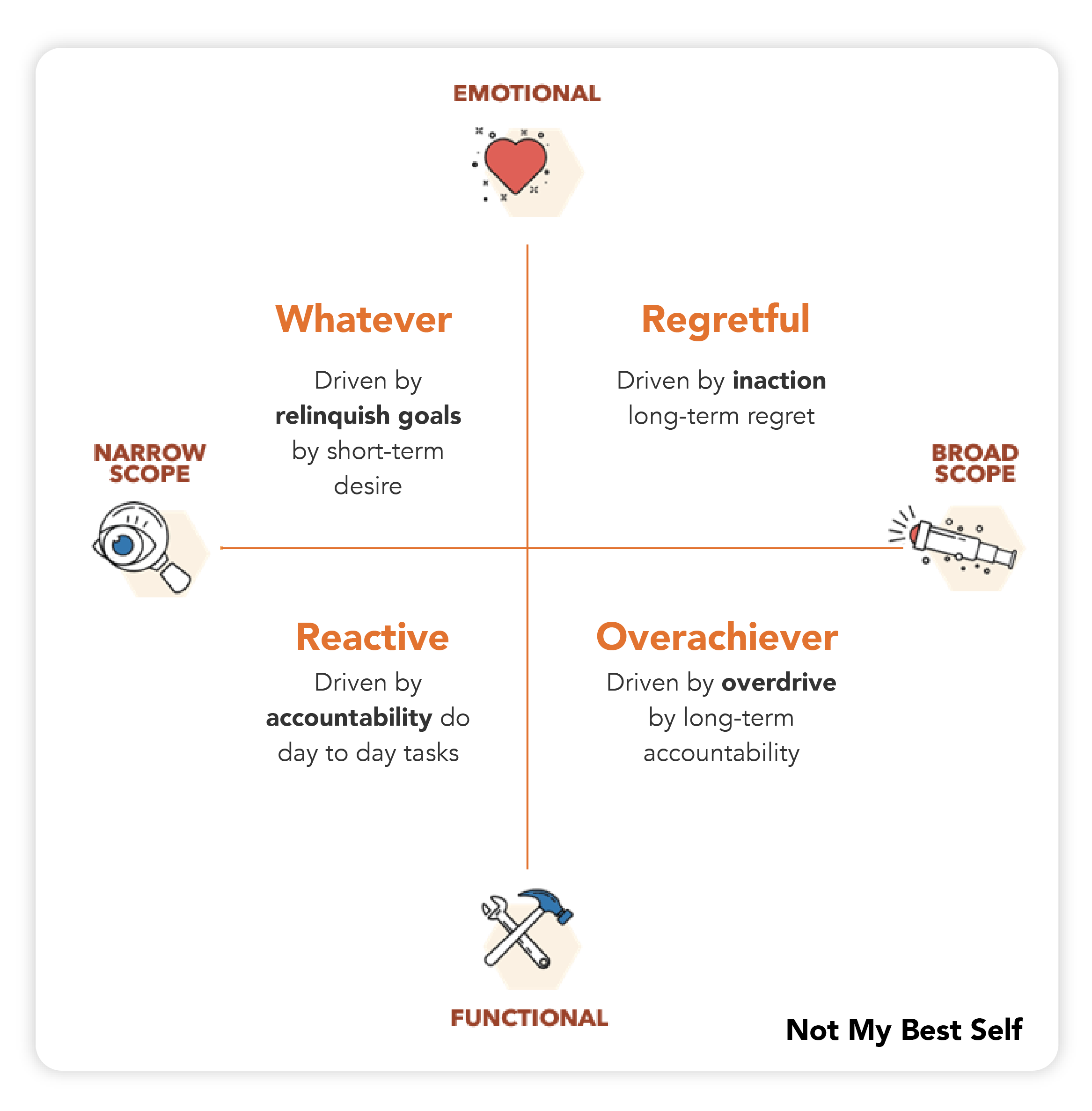
“Not My Best Self” Mindsets
Represents the four mindsets that people are in when their behaviors are not well aligned with their health care goals, or are potentially destructive to their overall health and well-being. People who struggle with “Not Myself” mindsets tend to be more pessimistic, judge themselves more harshly, and have fewer tools, less robust support networks, and fewer strategies or coping mechanisms to keep themselves buoyed up.
Understanding Behavior Change
Frameworks, Methodologies and Principles
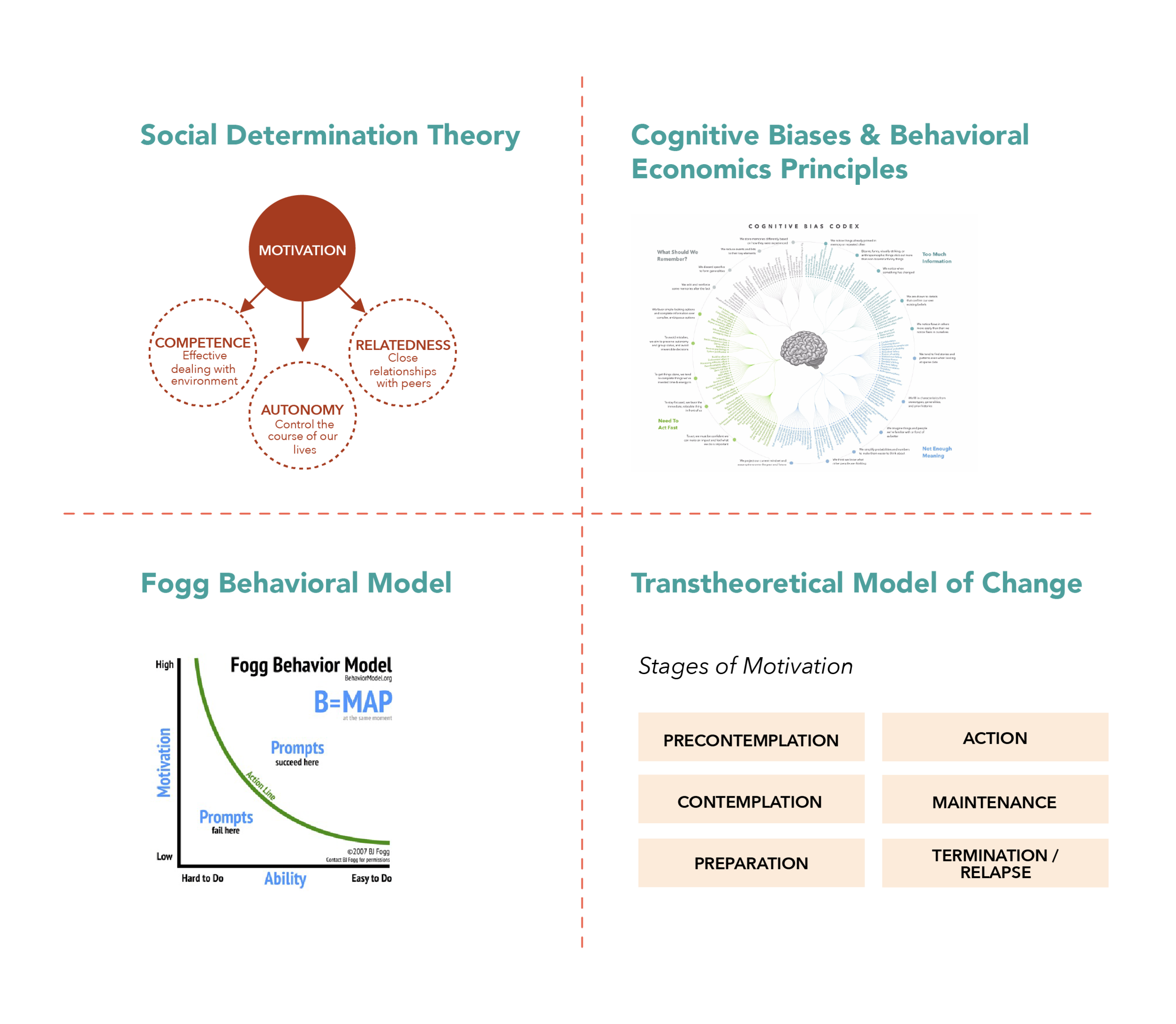
We immersed ourselves into the Behavior Change space and studied multiple theories, frameworks and models from academia and industry. We quickly realized, there is no one solution that applies to all problems.
KP ME will need to blend together many approaches tailored to the problem solved for and the needs of the individuals.
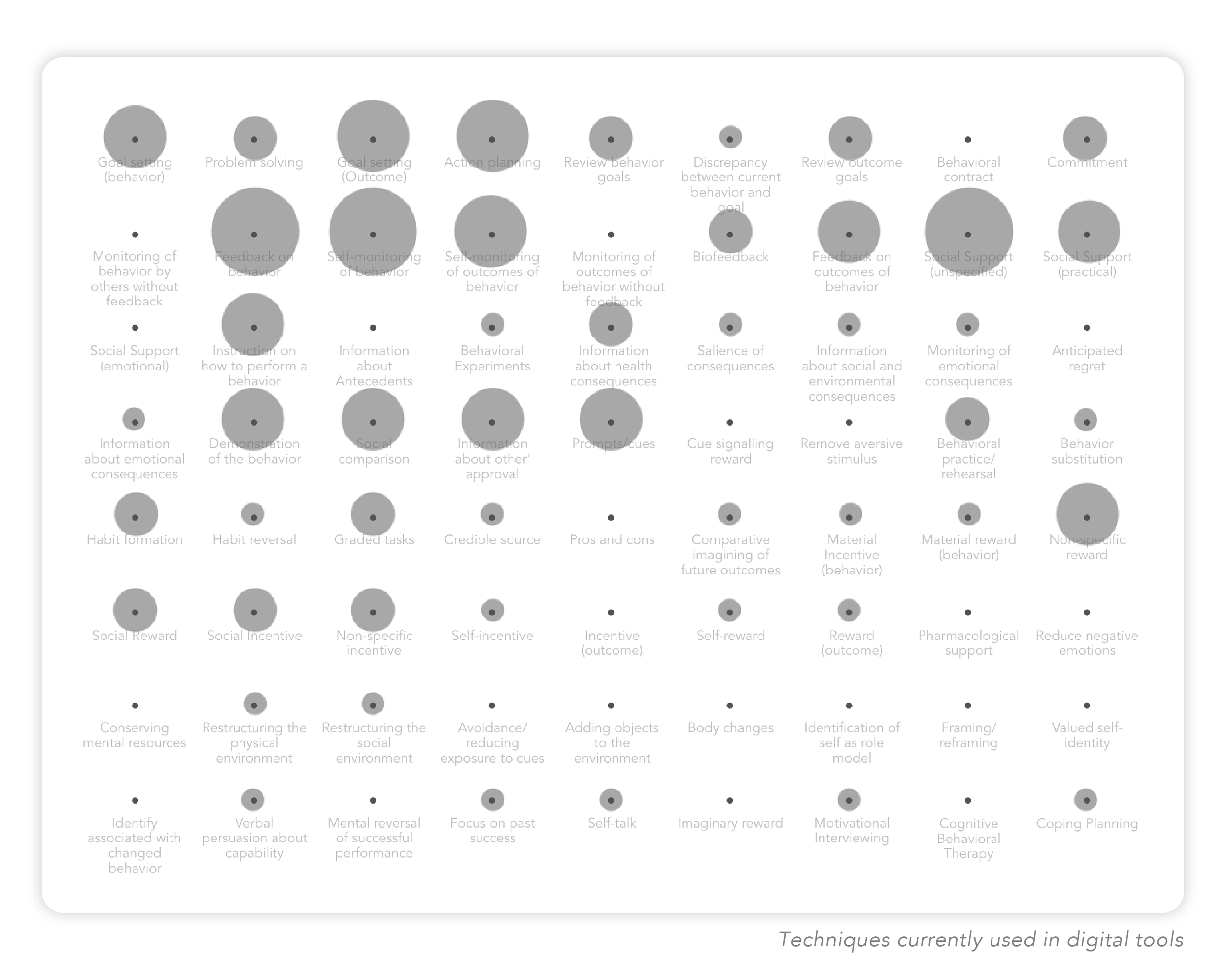
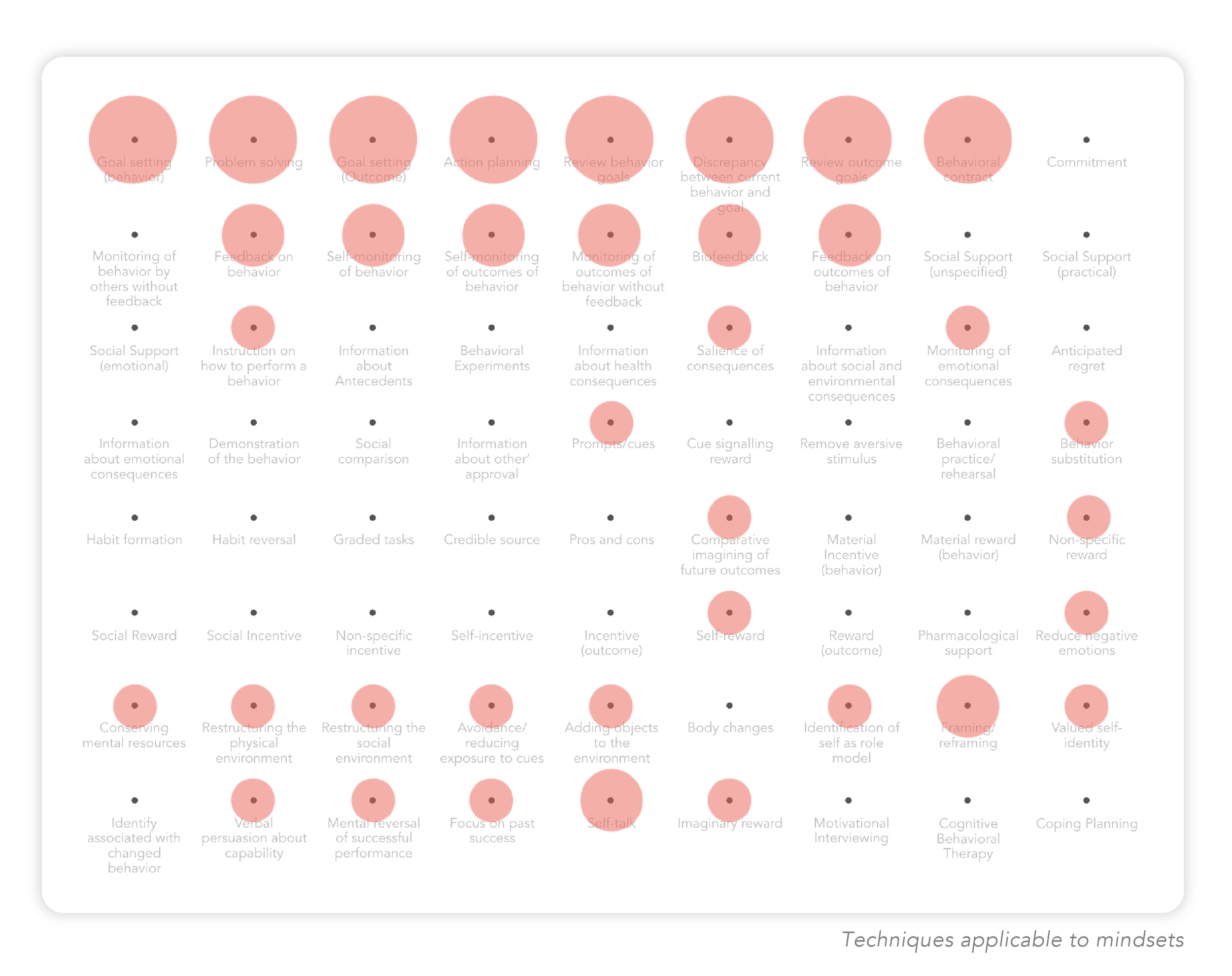
Behavioral Change Techniques
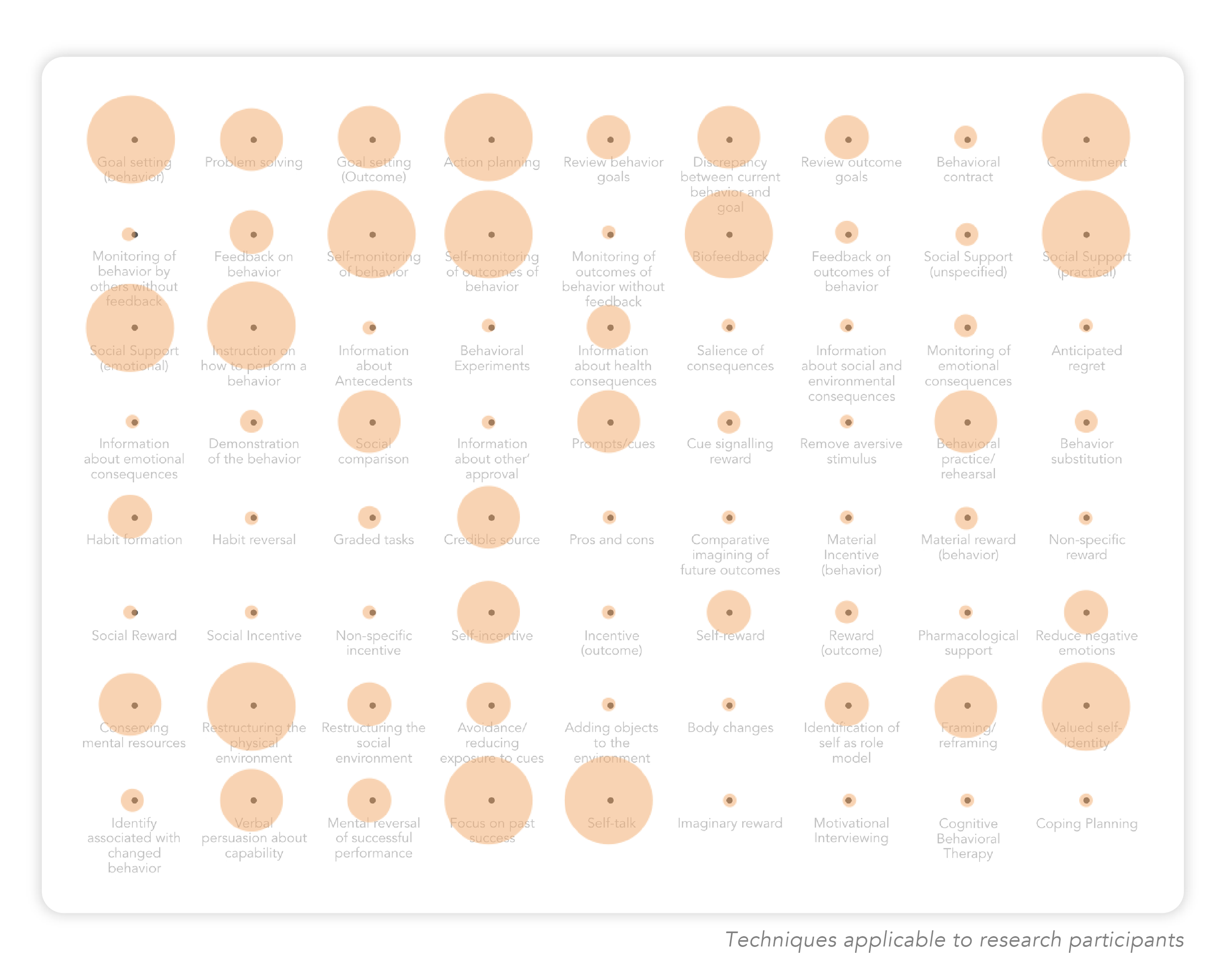
People haven’t changed, but where we can support and impact them through behavioral change methods have. Our research has pointed us to opportunities for under-utilized, but essential behavior change techniques.
Our proposed features will incorporate these behavioral change techniques in both physical and digital channels to elevate KP ME and give it the power to pull people towards the visionary mindset to realize a holistic vision of their health and life.
The right engagement
in the moments that matter
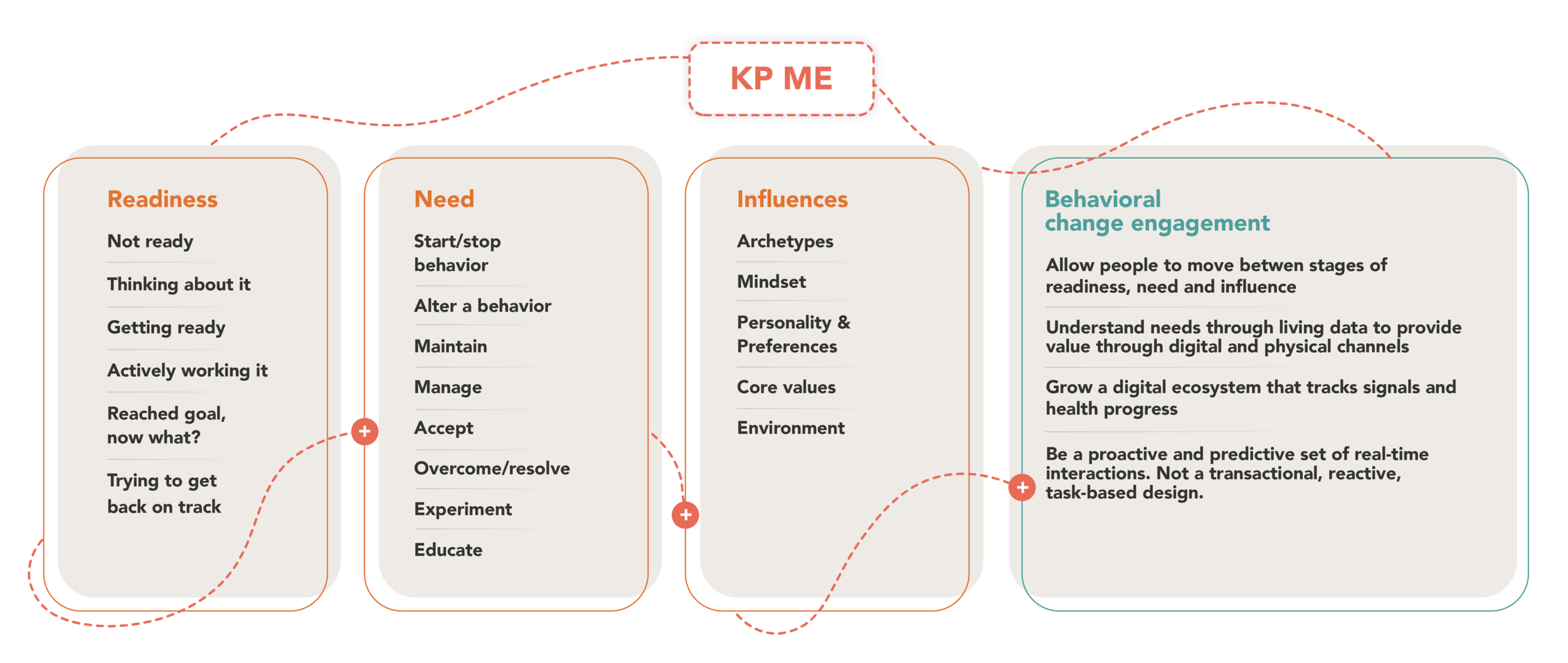
Everyone’s data tells a different story. To help shape this story, we need to detect and understand signals in context to know when and how to best connect with people during the moments that matter.
We will build upon existing behavioral change frameworks to create an effective technique that is fluid to people’s readiness, needs, and influences. KP ME will sense and respond to people in a way that we haven’t before through digital and physical touch points.
Where the opportunity is
Ideation Overview
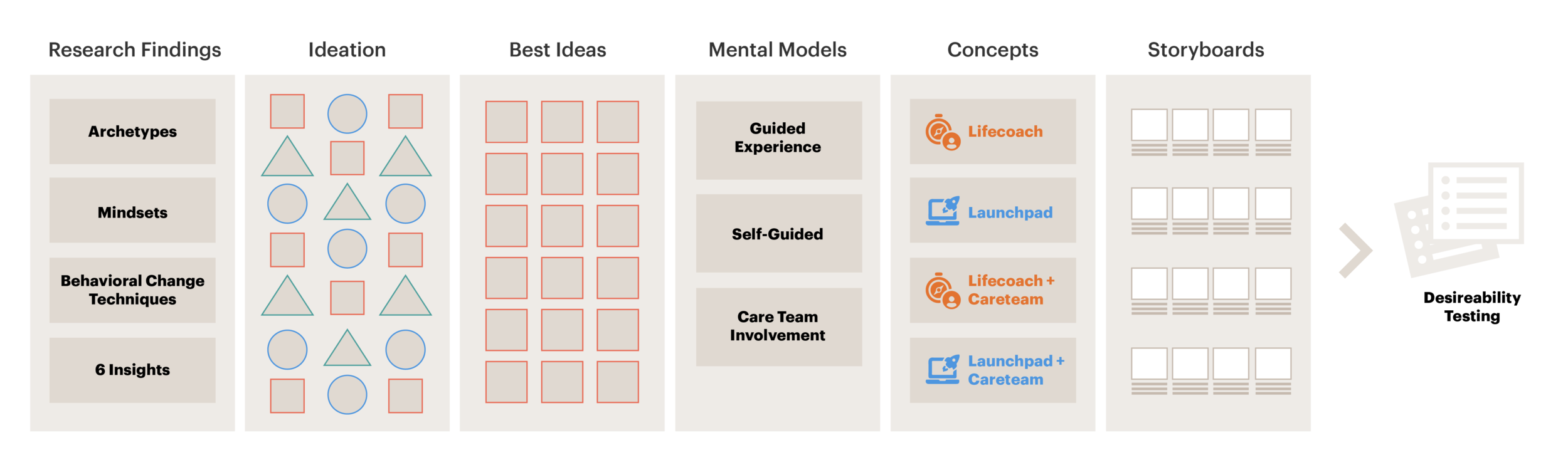
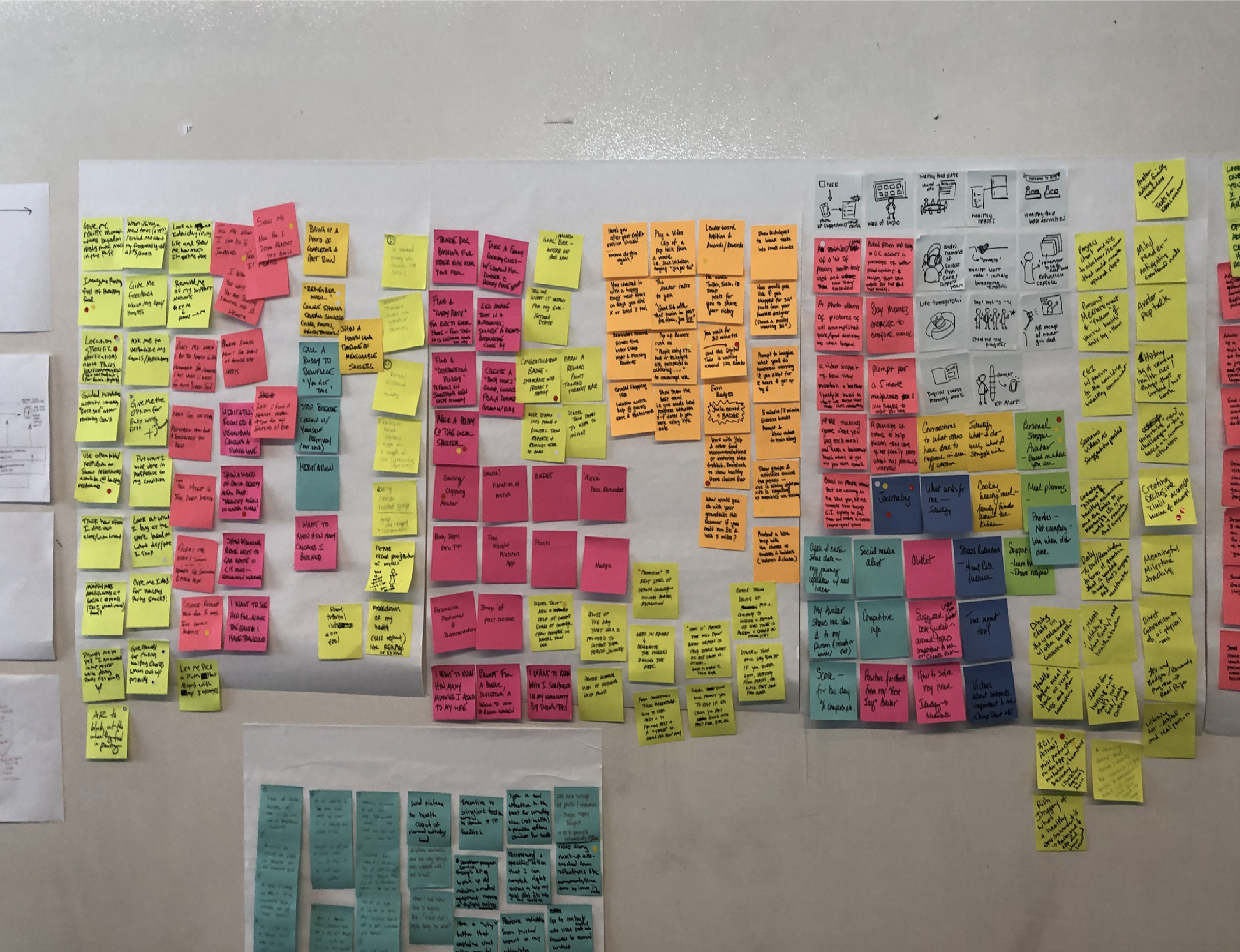
Over the course of the ideation sessions, the research findings, user needs, and behavior change techniques formed the jumping off point to develop 150+ ideas for how KP ME could engage users. These concepts were grouped and prioritized to identify 18 major ideas of features to further explore.
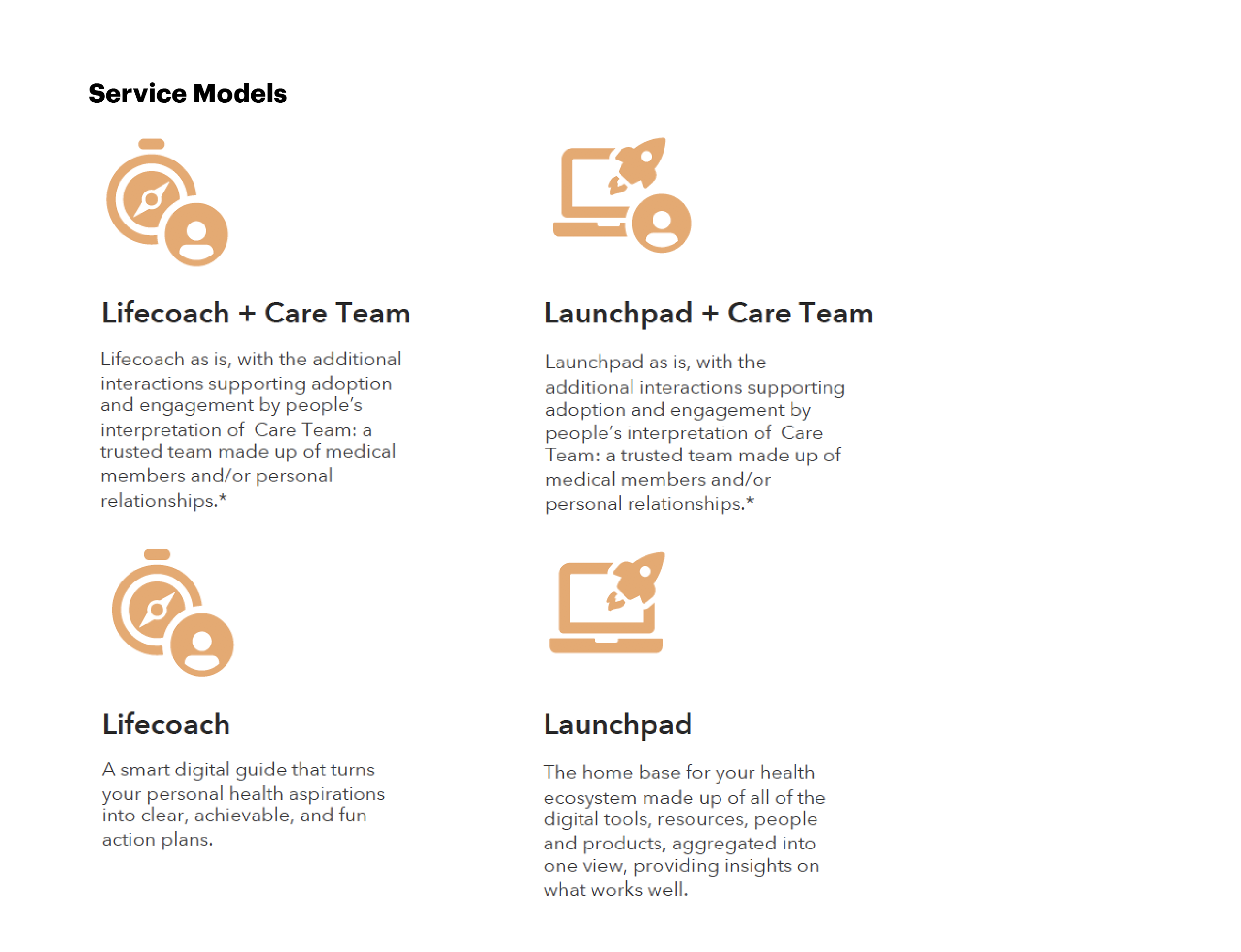
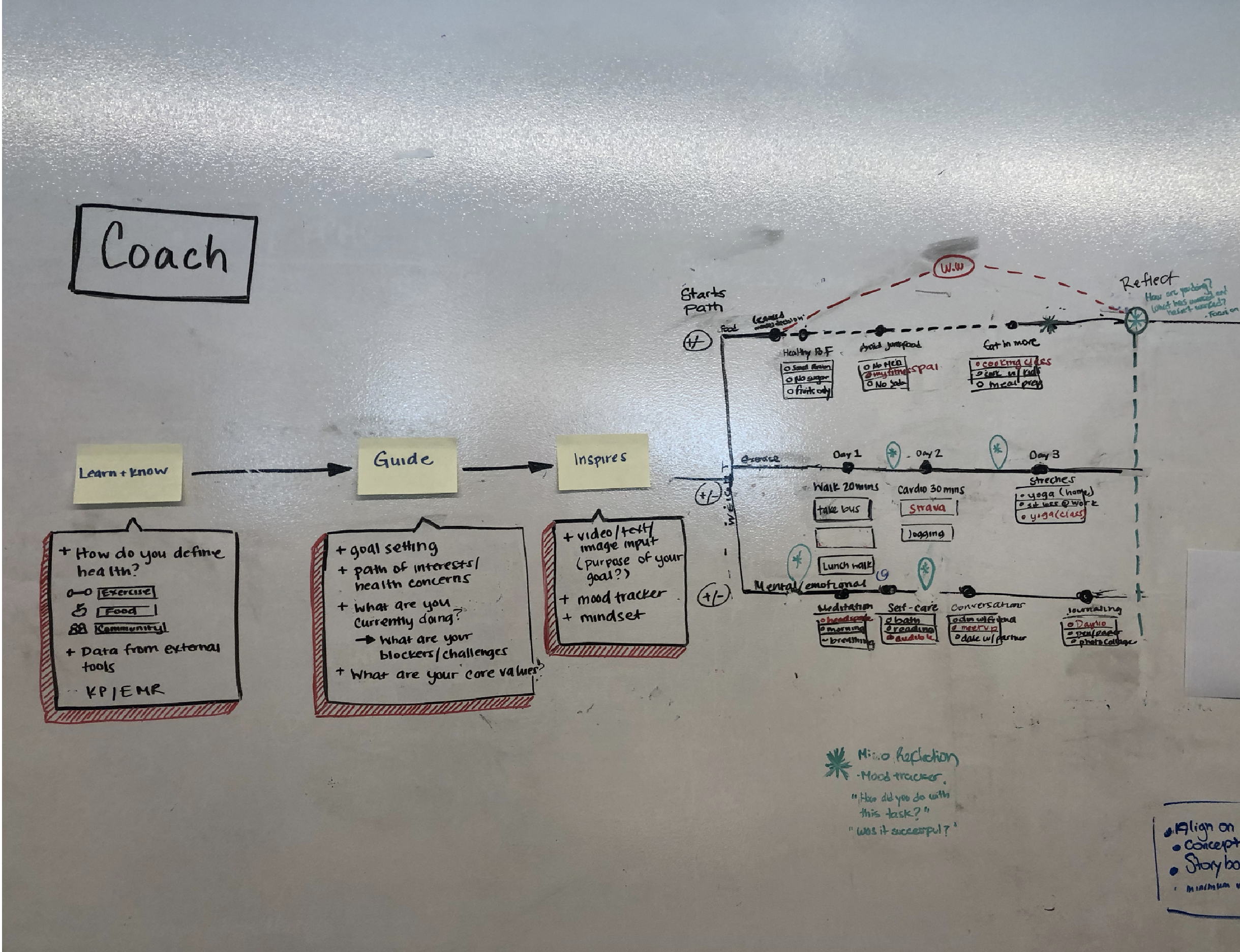
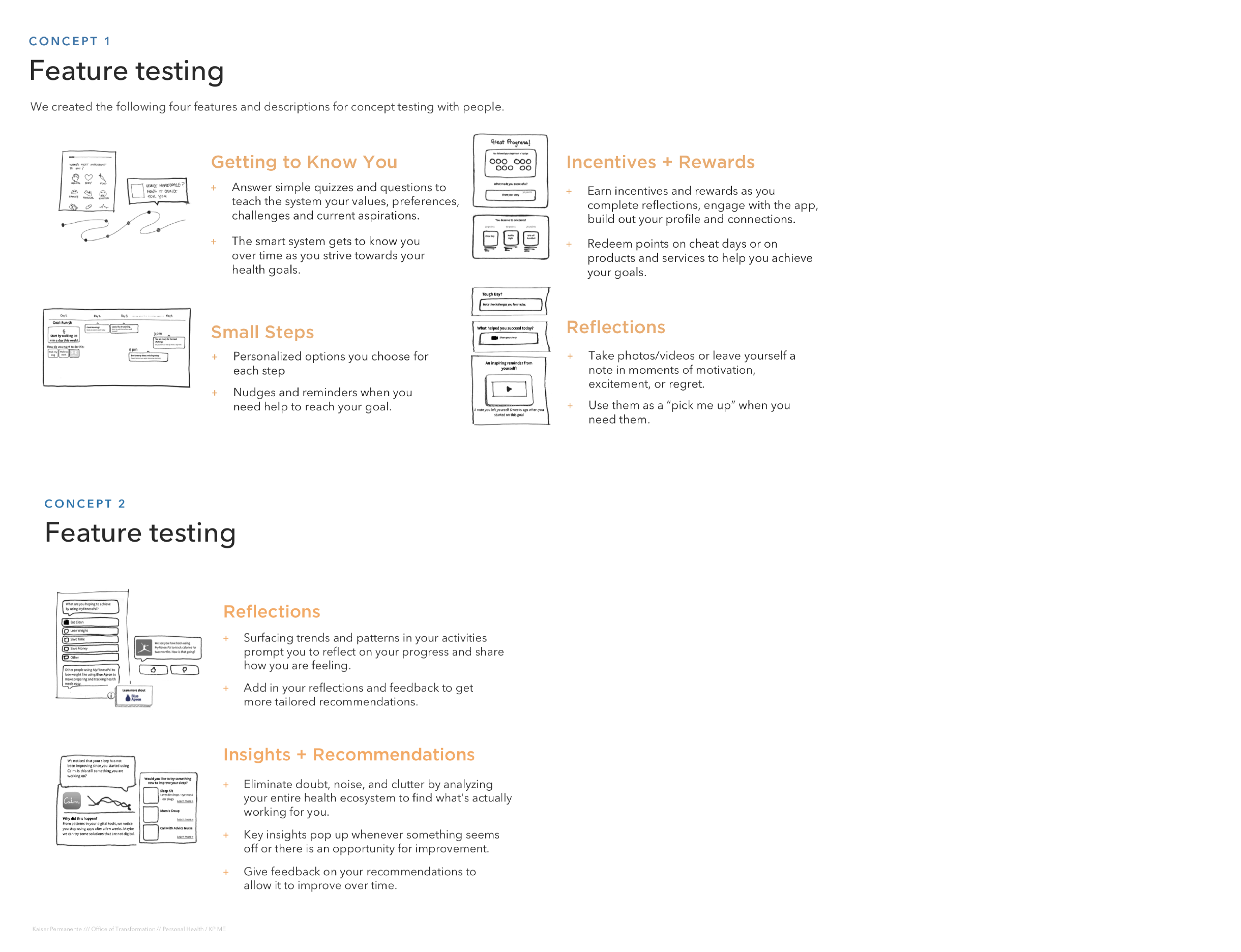
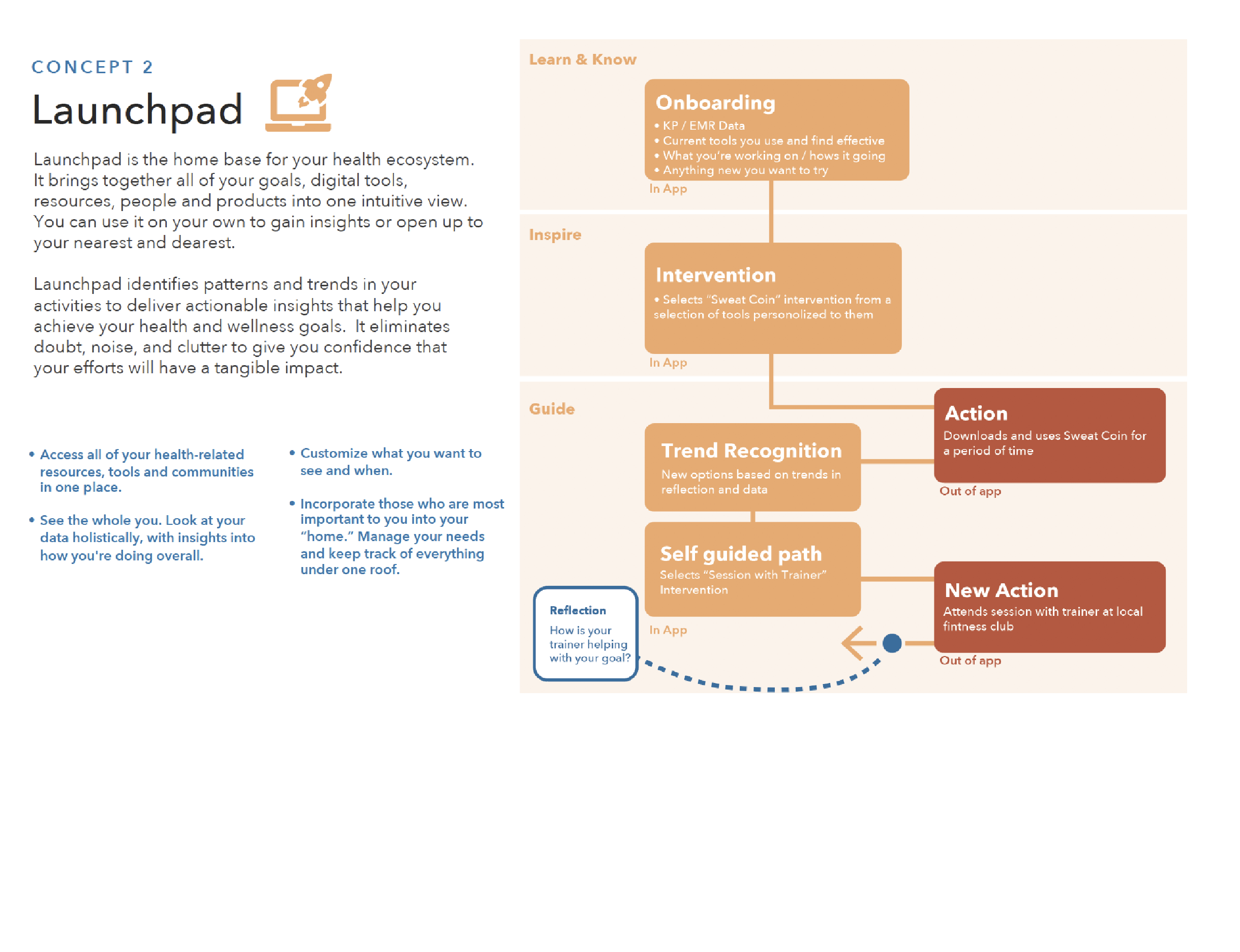
These 18 major ideas for features unveiled three mental models that served as potential frameworks for the overall experience: Guided, Self-Guided, Care-Team Driven. By pulling the major features into the these three mental models, we created 4 potential KP ME service models. We then created storyboards alongside our key stakeholders based on the prioritized archetypes to test the 4 concepts and features.
Desirability Testing
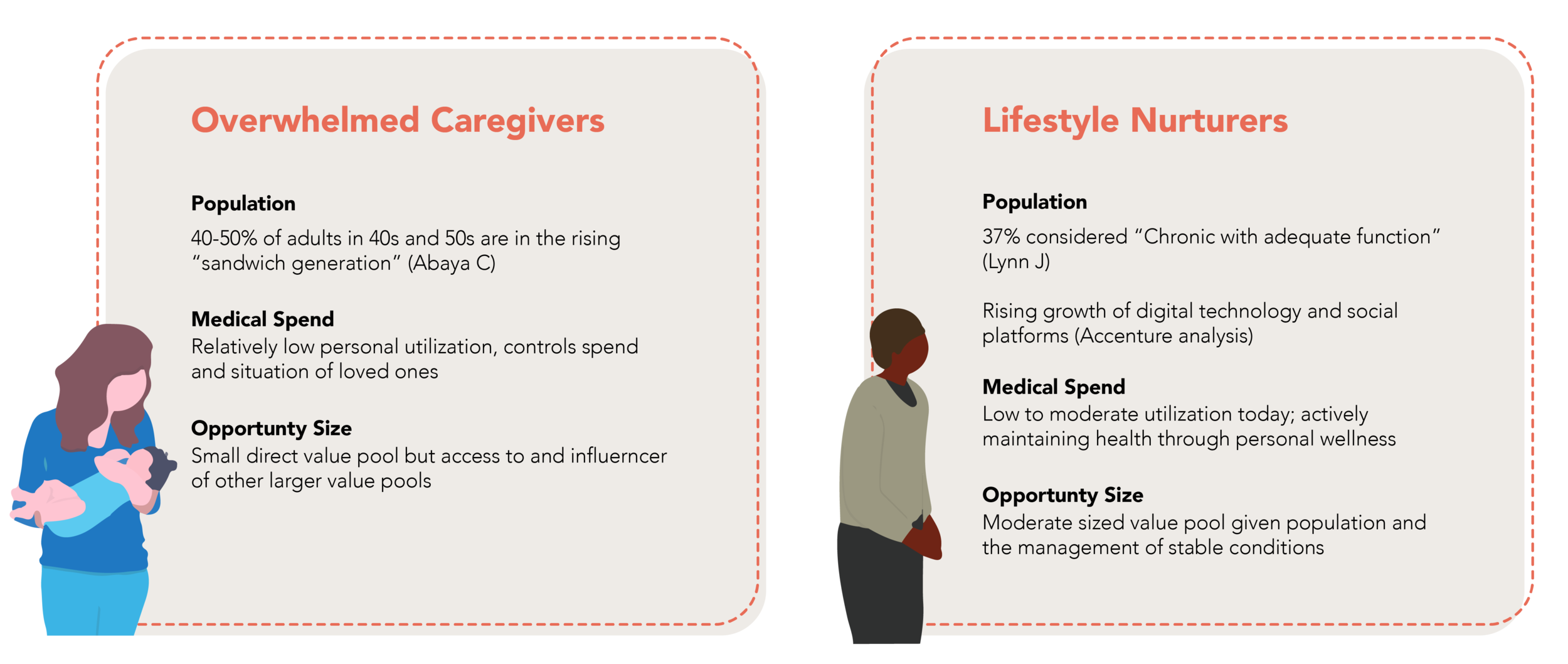
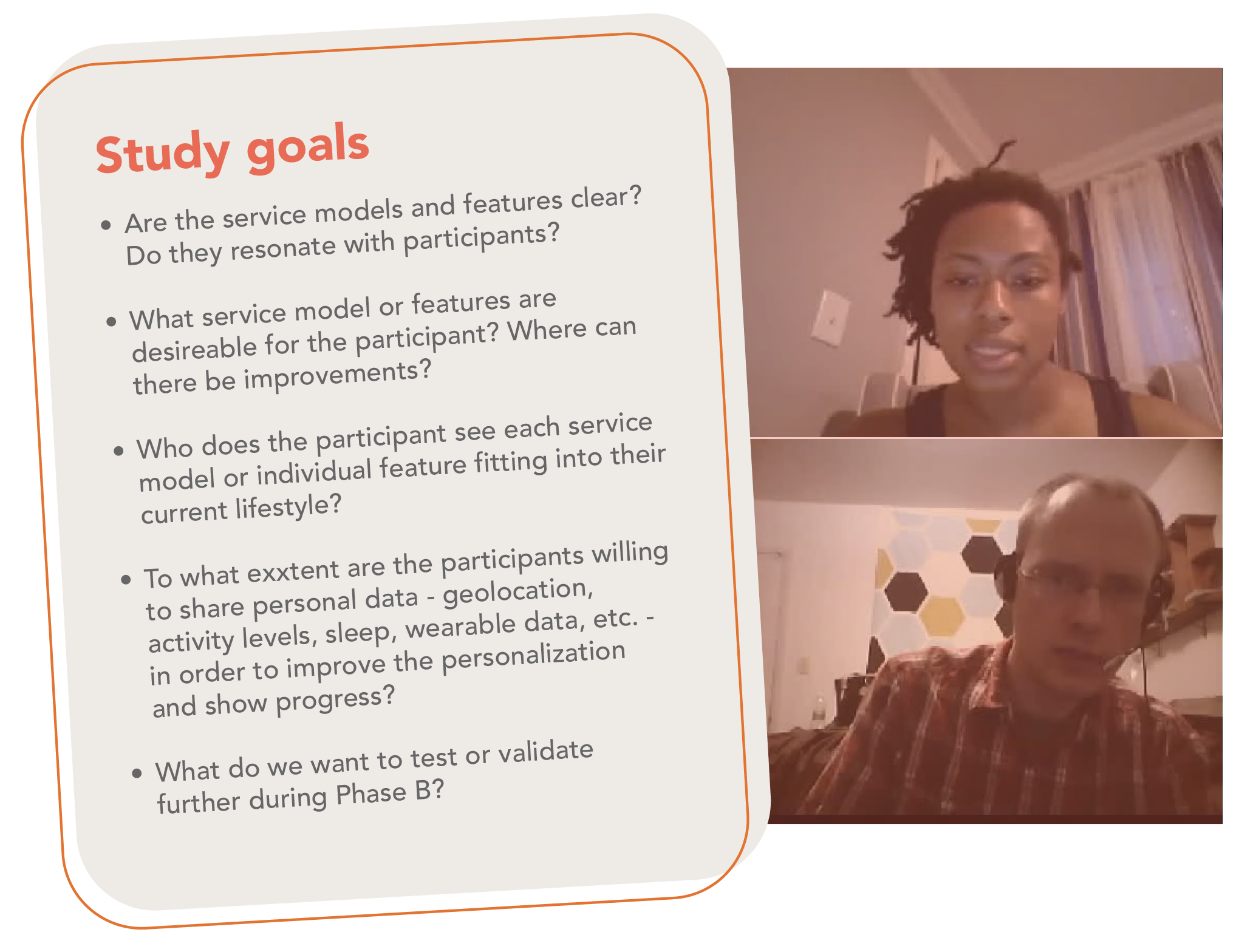
We recruited 9 participants, with 6 of them falling under the two prioritized archetypes: Overwhelmed Caregivers and Lifestyle Nurturers. Through this we aimed to evaluate our concepts and proposed features in one hour sessions. This testing helped informed our initial design direction and concept features.
Paving the path forward
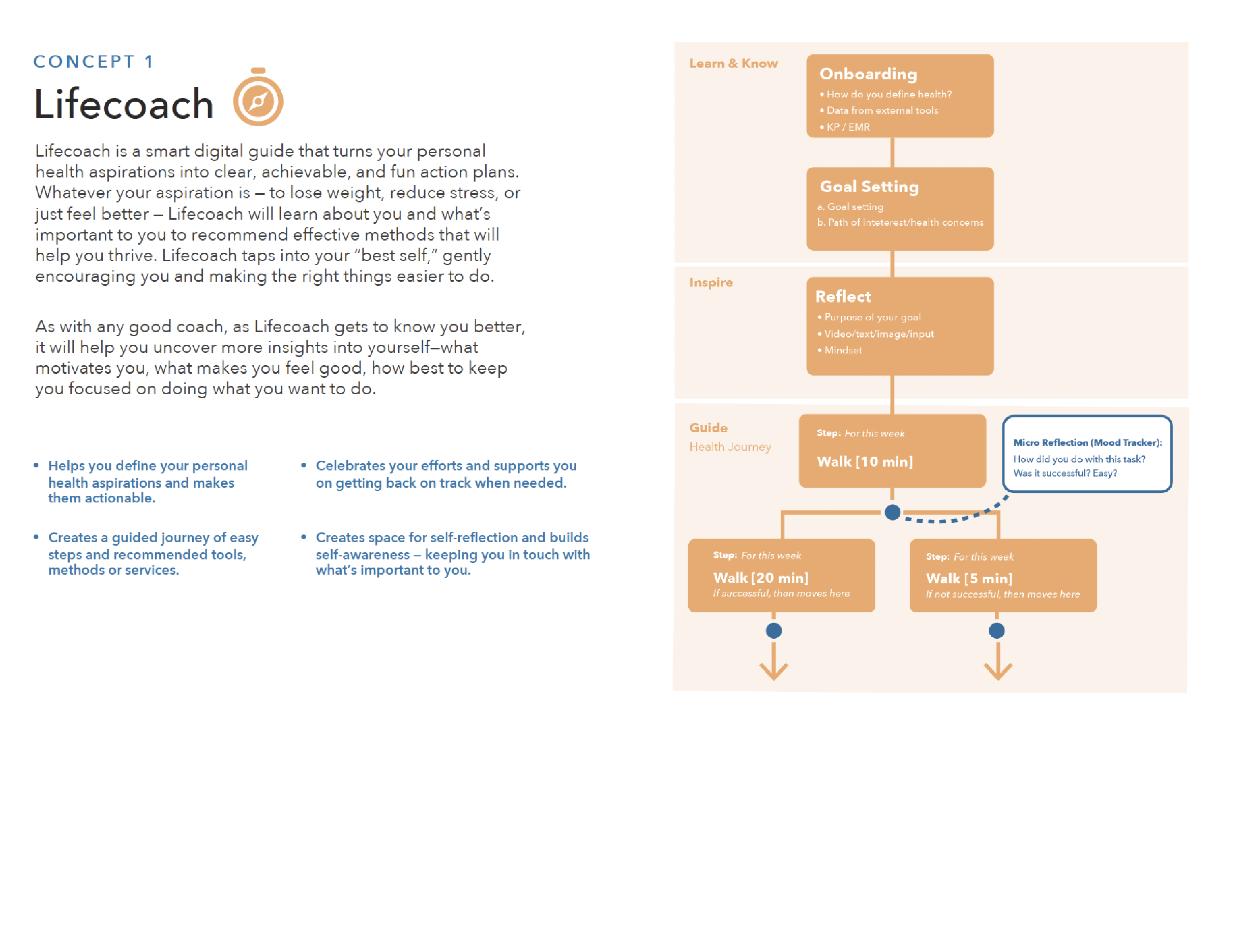
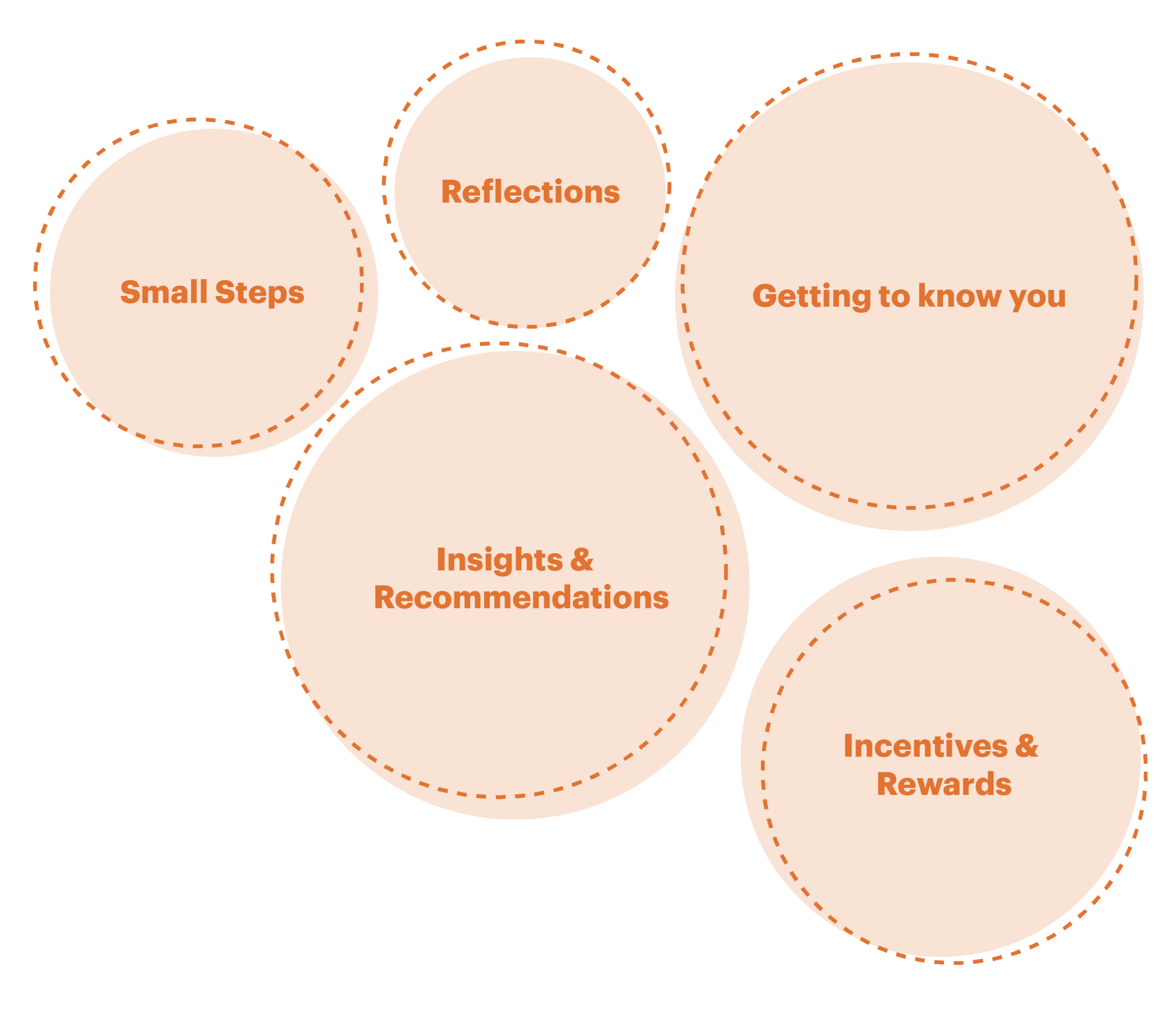
A a smart digital guide that turns your personal health aspirations into clear, achievable, and fun action plans.
Based on the desirability testing along with our business analysis, we identified the service model from the 4 concepts explored to move forward into development. By narrowing down to a specific service model we mapped out the key enabling and enhancing features. We created a roadmap for what KP ME is, what the MVP should be.
KP ME Service Blueprint
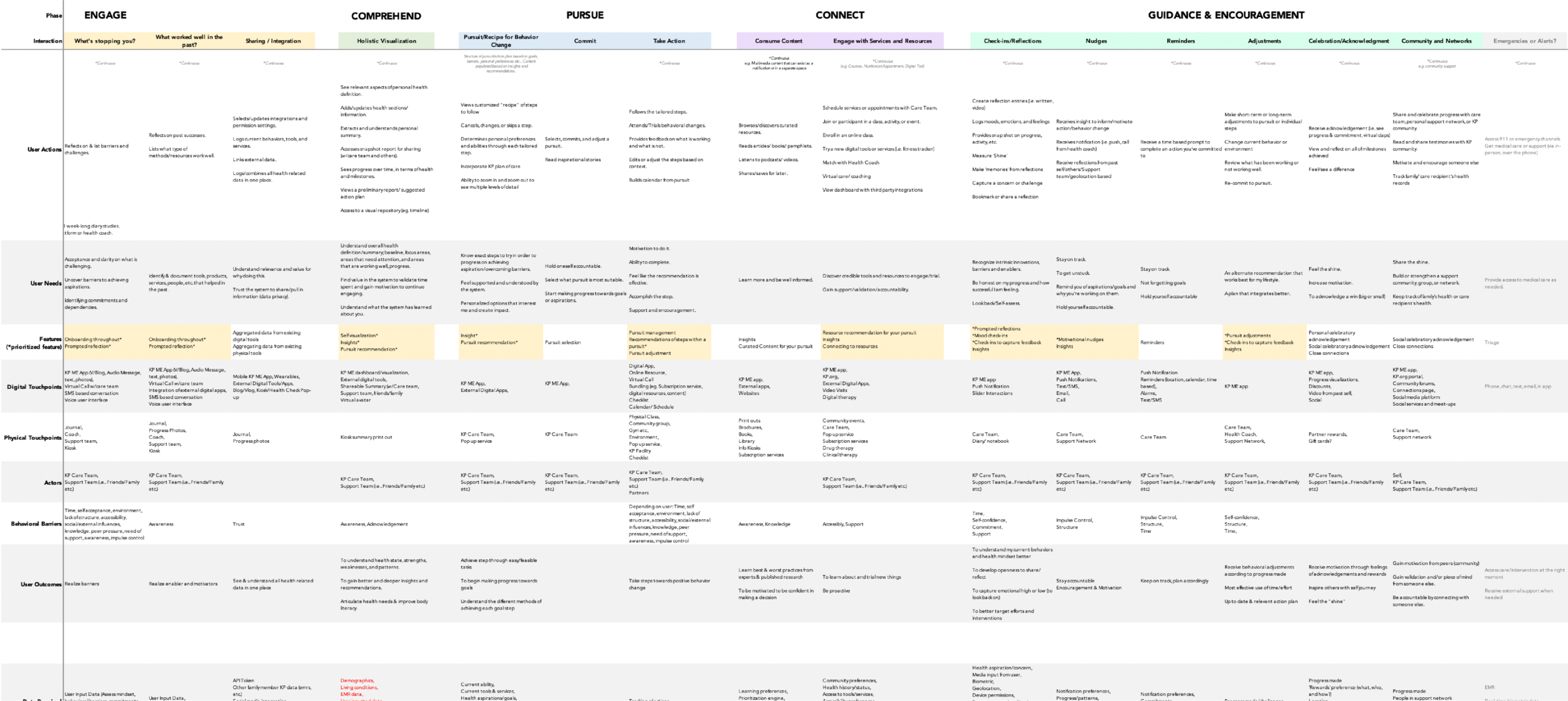
As a next step we looked at what the service ecosystem of KP ME is. We started a blueprint that served as a living document that naturally grew as we kept defining KP ME from a service and product perspective.
The blueprint is structured by the different phases of the service offering as a framework to identify key features, user needs, touchpoints, behavioral barriers, outcomes, and KPIs.
Crafting stories
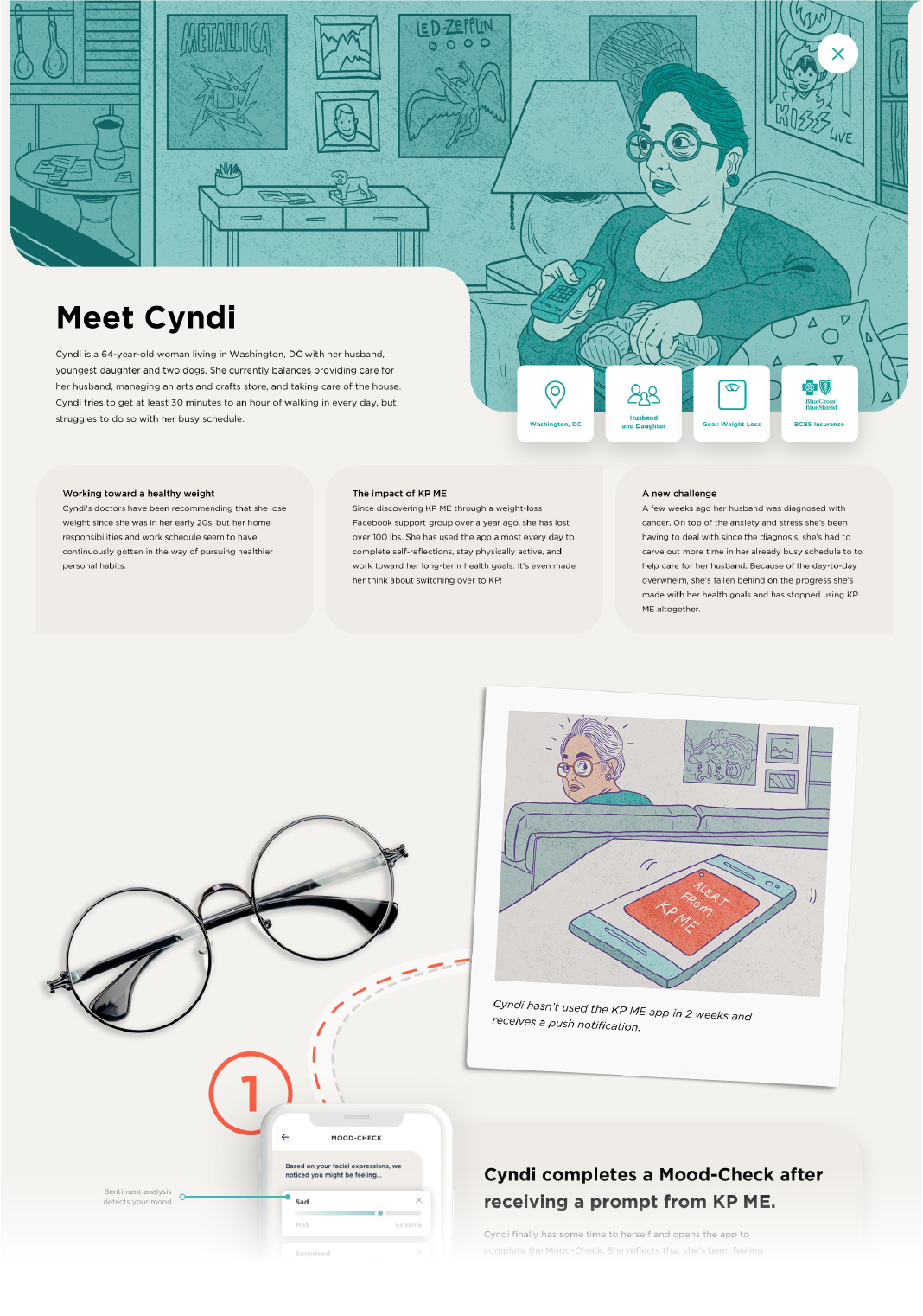
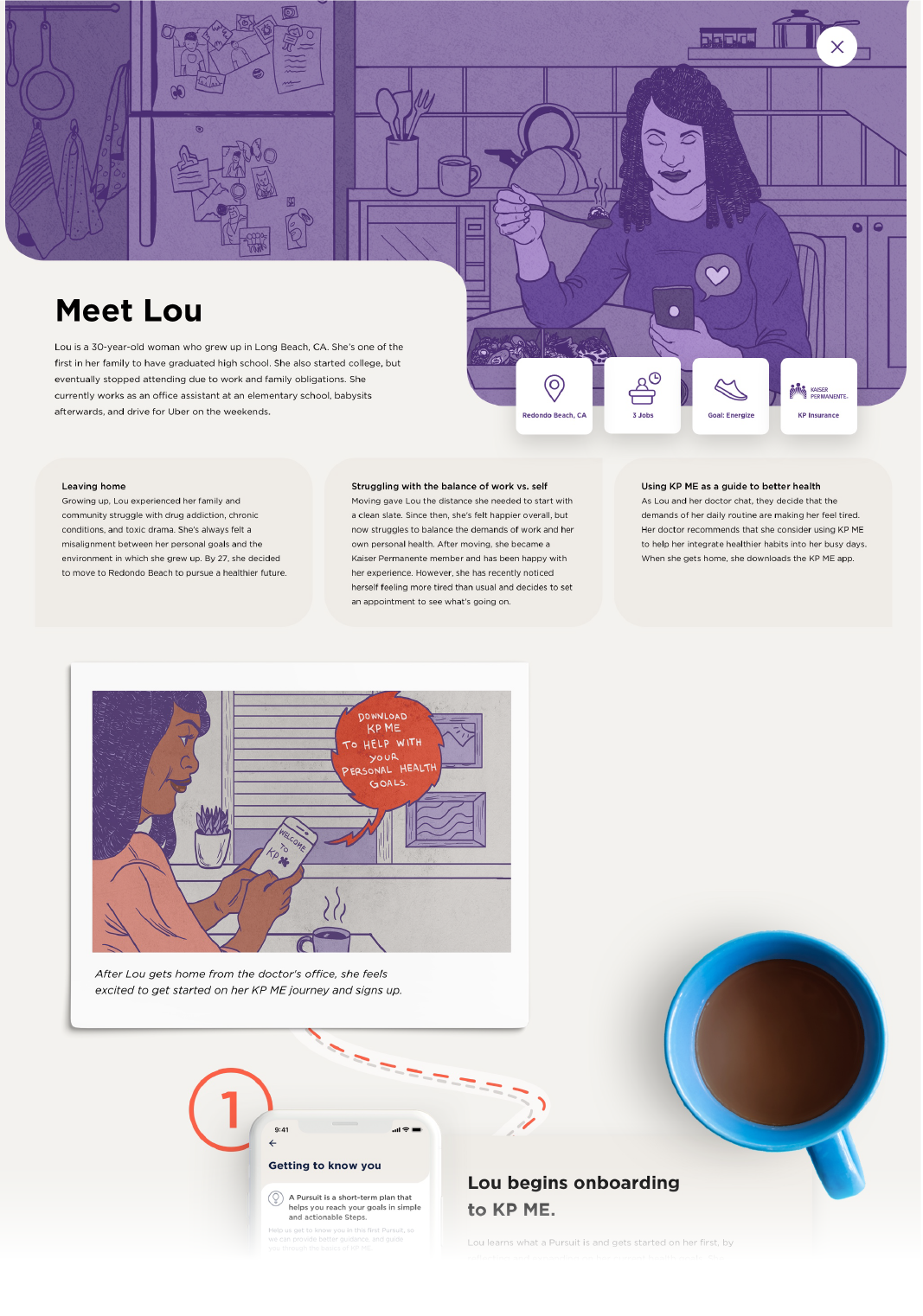
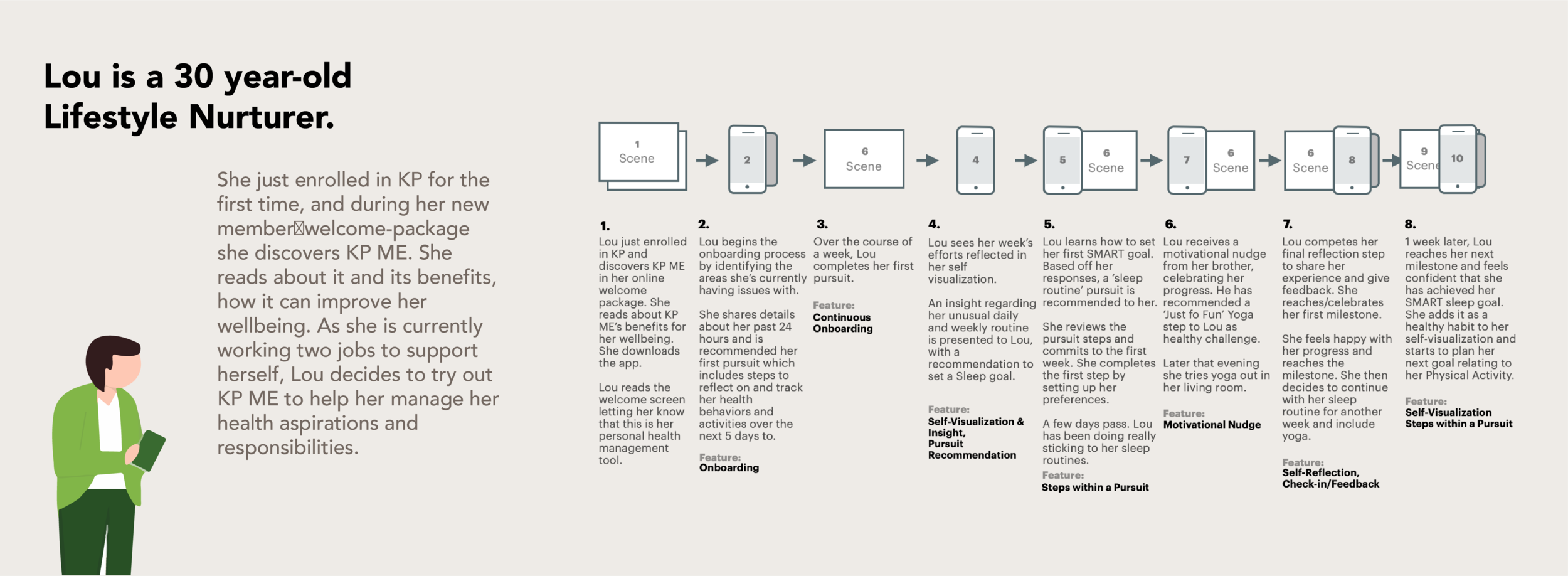
We took our two prioritized archetypes and developed two stories. This allowed us to orient our thinking to understand the different touchpoints of the product and service, which ultimately defined the key screens to design for.
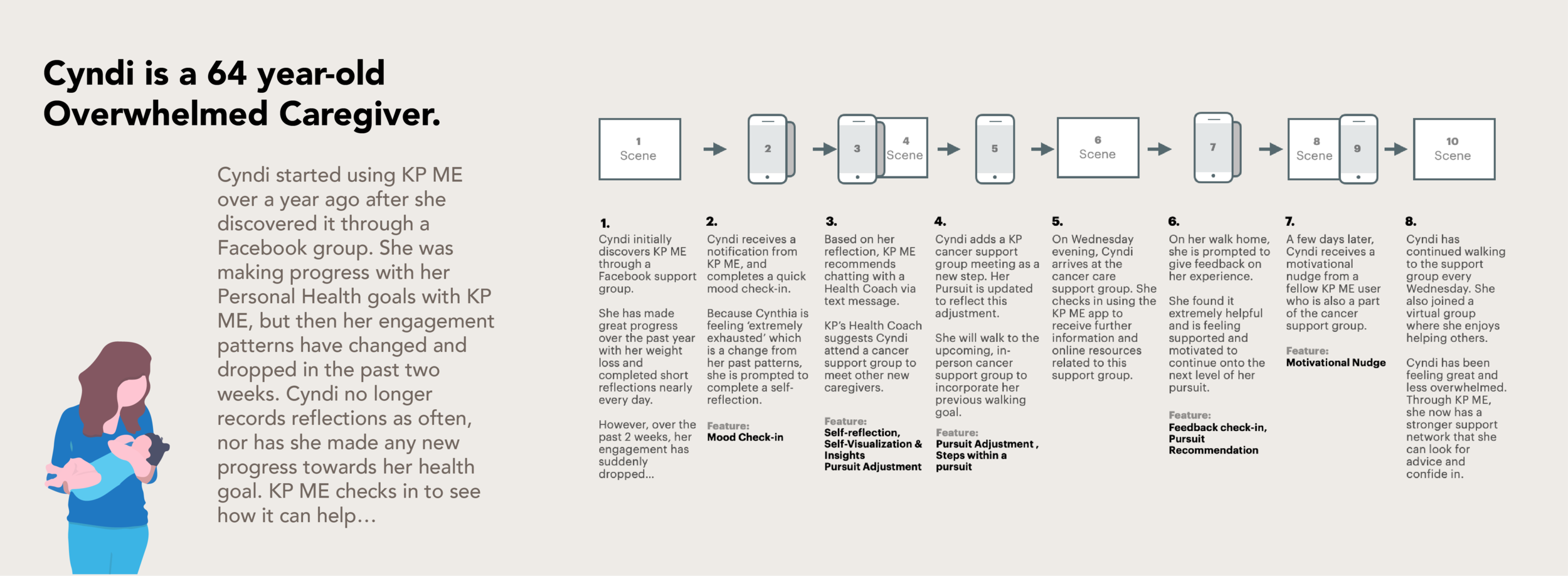
Going digital
We took our two prioritized archetypes and developed two stories. This allowed us to orient our thinking to understand the different touchpoints of the product and service, which ultimately defined the key screens to design for.
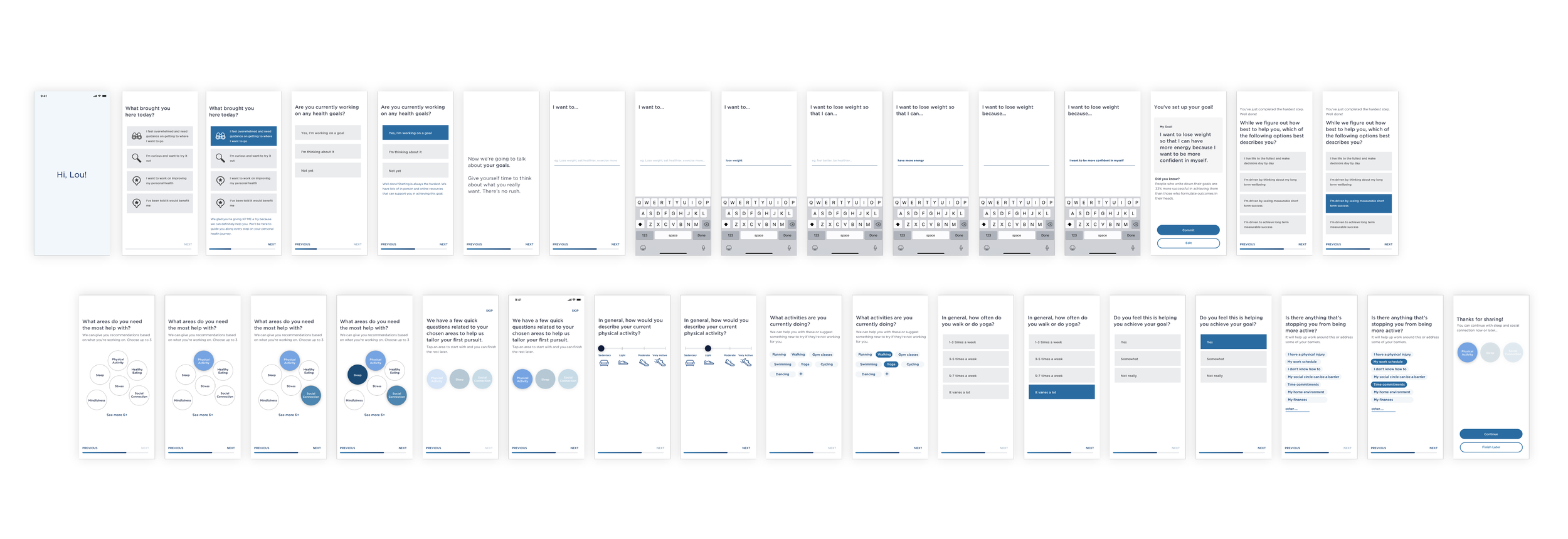
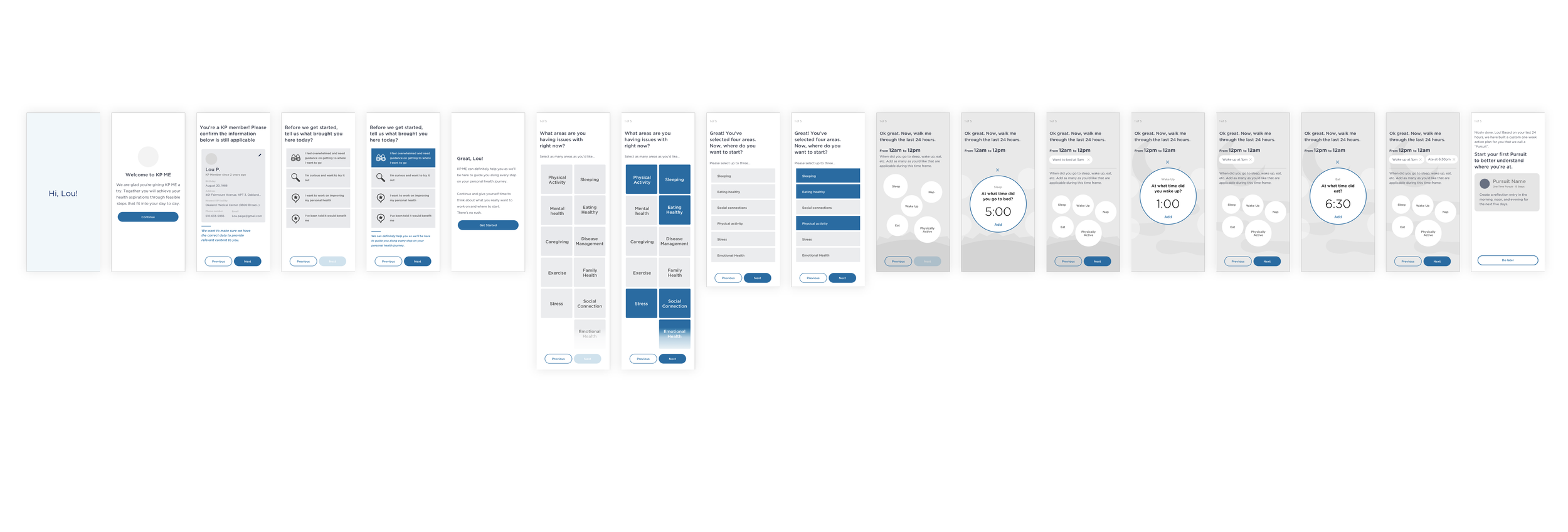
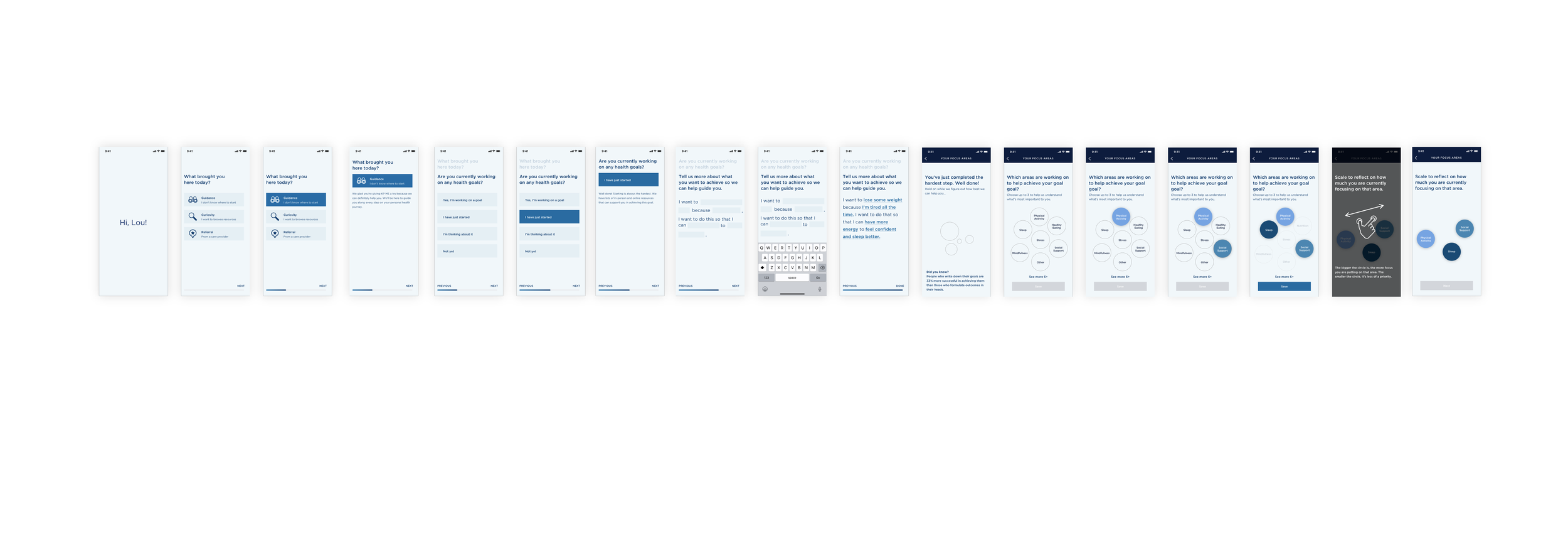
Establishing the language
We took our two prioritized archetypes and developed two stories. This allowed us to orient our thinking to understand the different touchpoints of the product and service, which ultimately defined the key screens to design for.
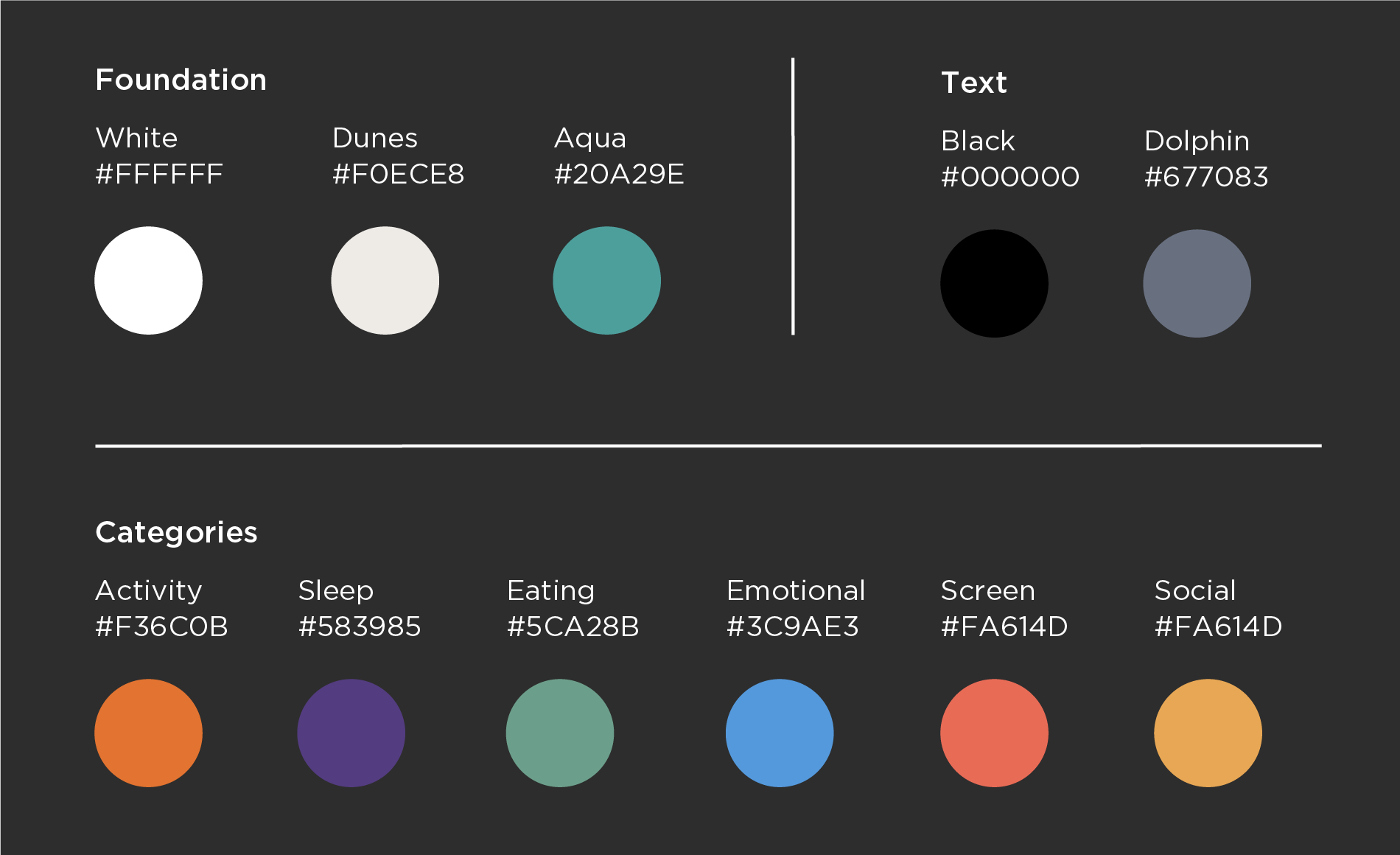
• Reliable
• Listener/Friendly
• Flexible
• Trustworthy
• Non-medical
• Smart
Defining the interaction model experience
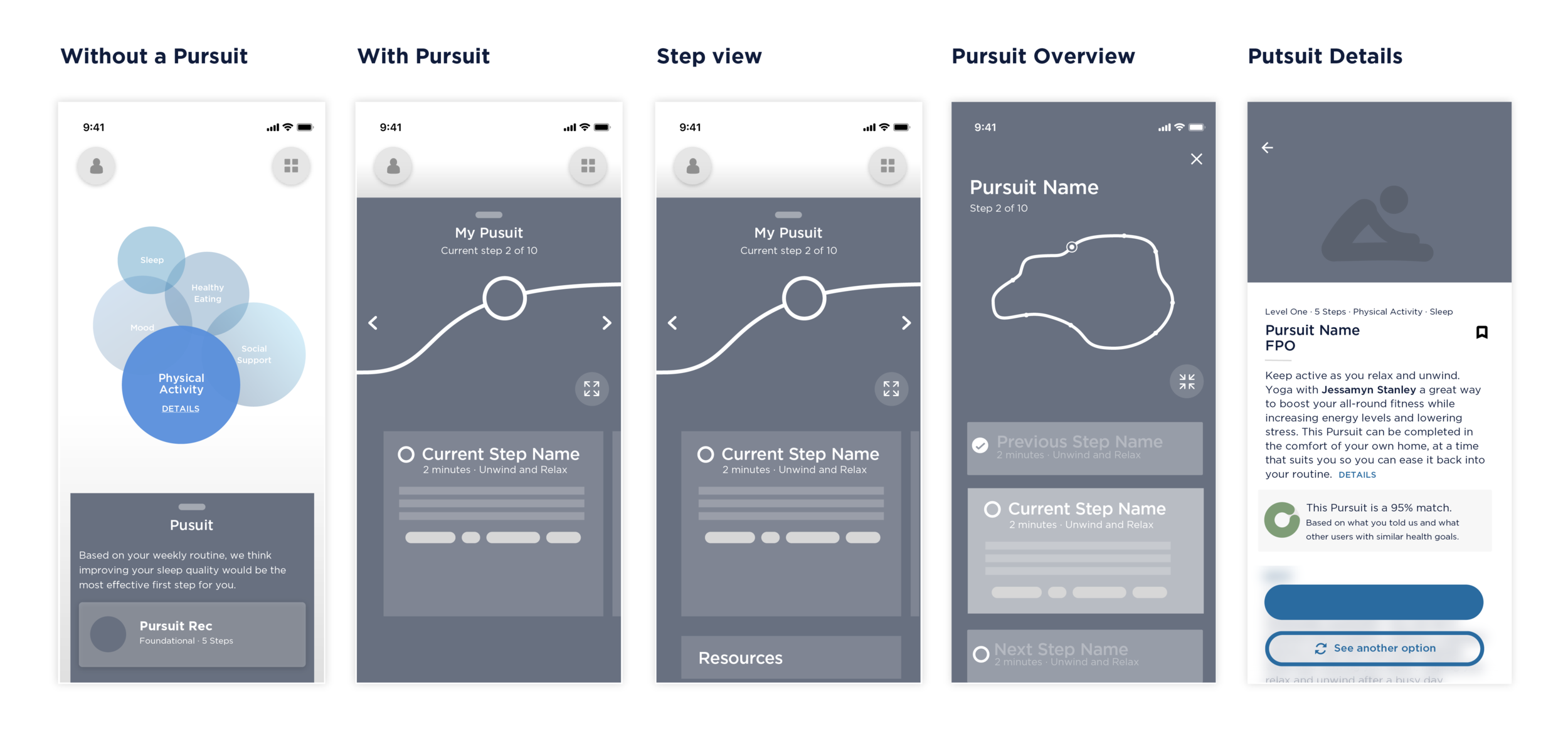
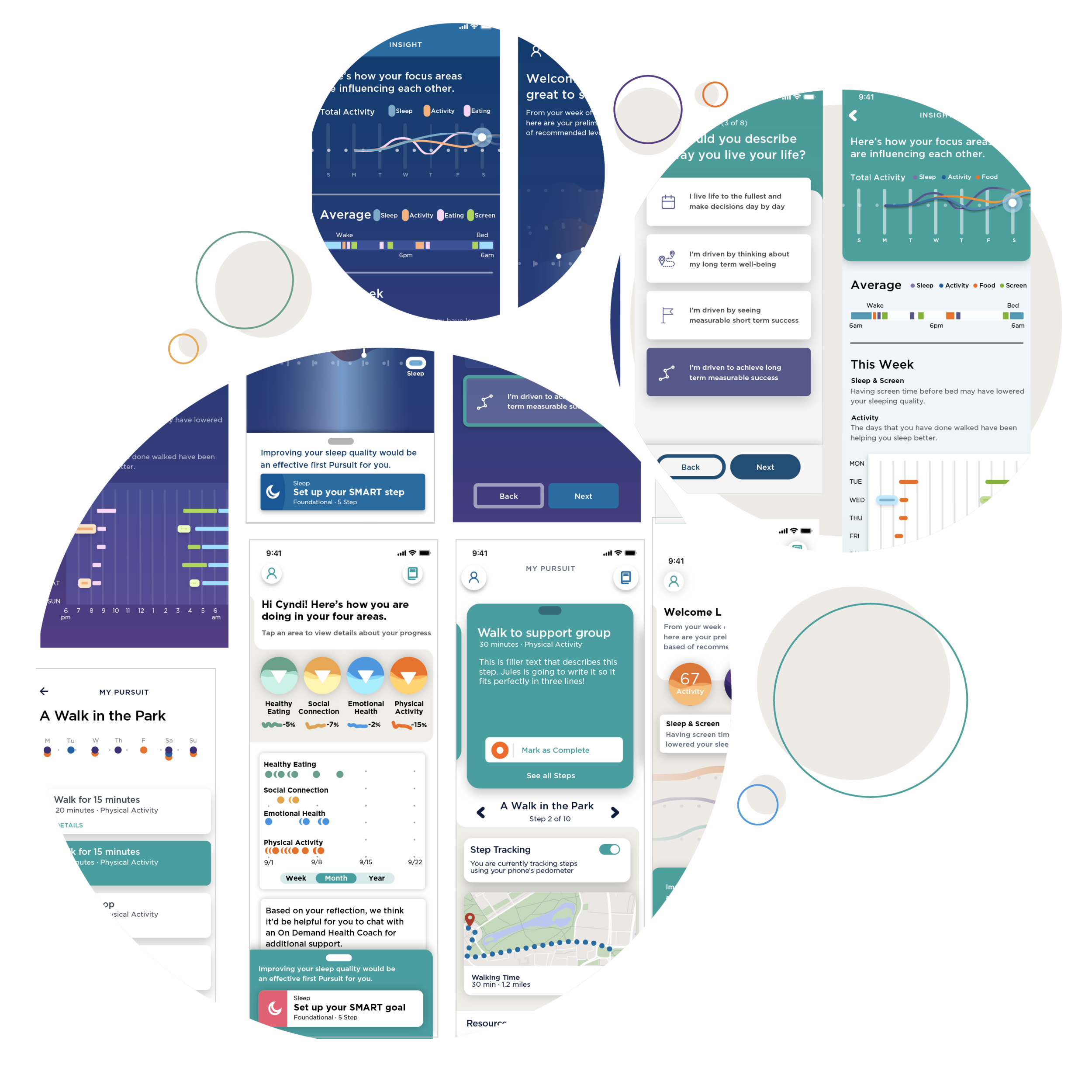
Four directional “paths” framed through “Learn, Know, Inspire, Guide” as the system’s core navigation structure.
Center*: Default view focused on your
goal’s daily steps.
Top*: Inspiration through an overview of one’s health (Self visualization).
Bottom*: Heads down time discovering new content (Pursuit Resources).
Left: A look into your past self visualization and steps completed.
Right: Plan ahead by seeing upcoming pursuit steps and future self visualization outcomes.
Insights
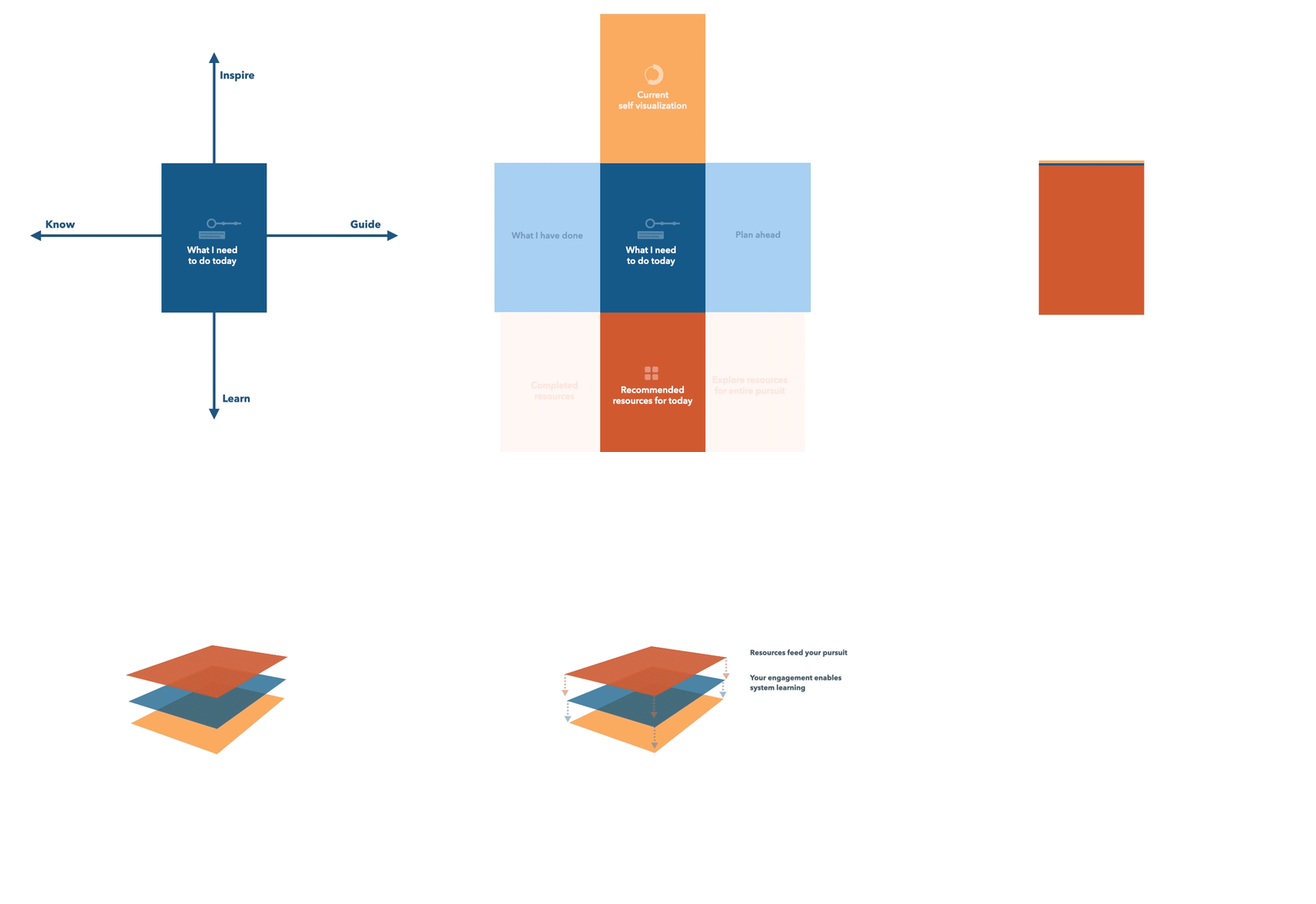
Capturing, analyzing, and presenting the information relevant to KP ME.
Continuous On-boarding
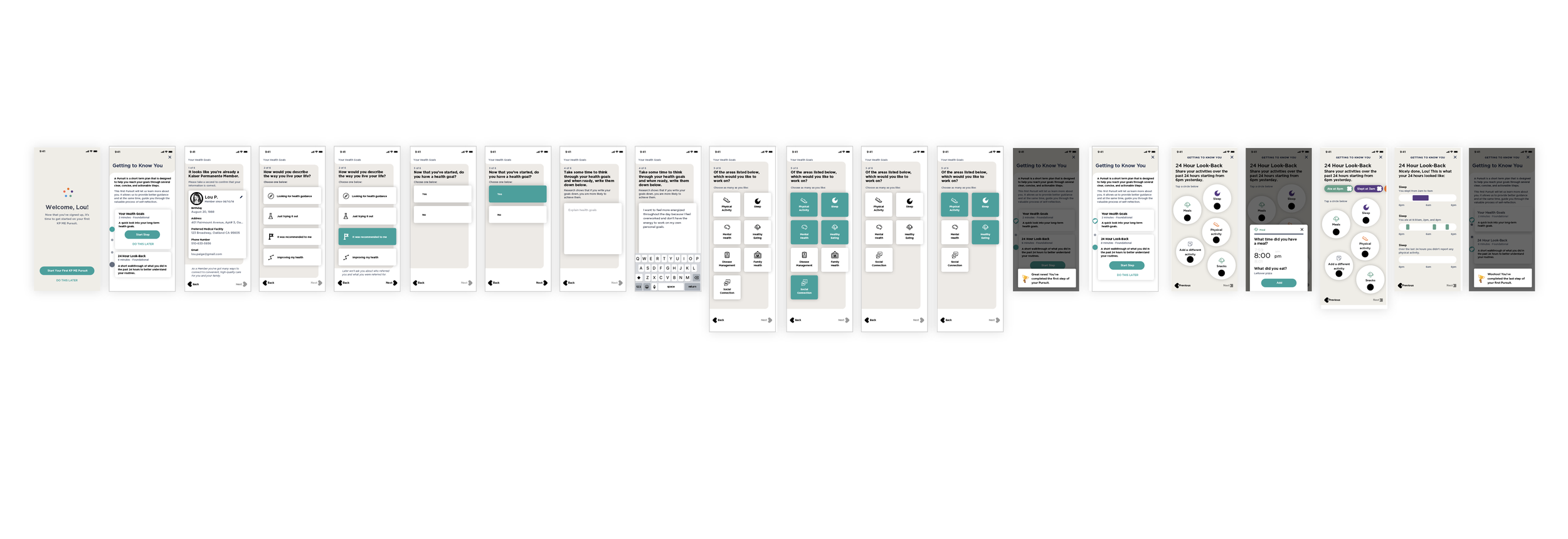
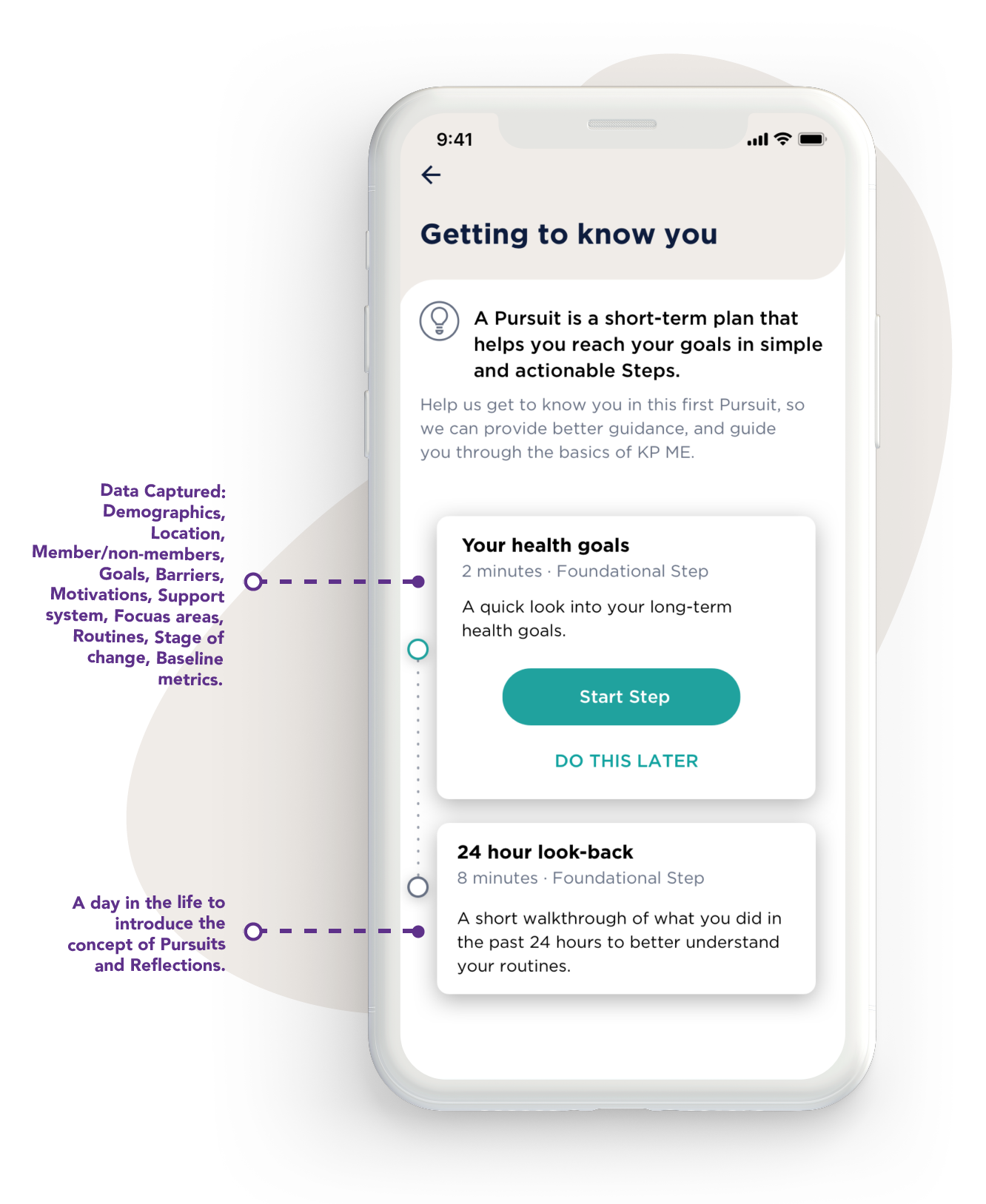
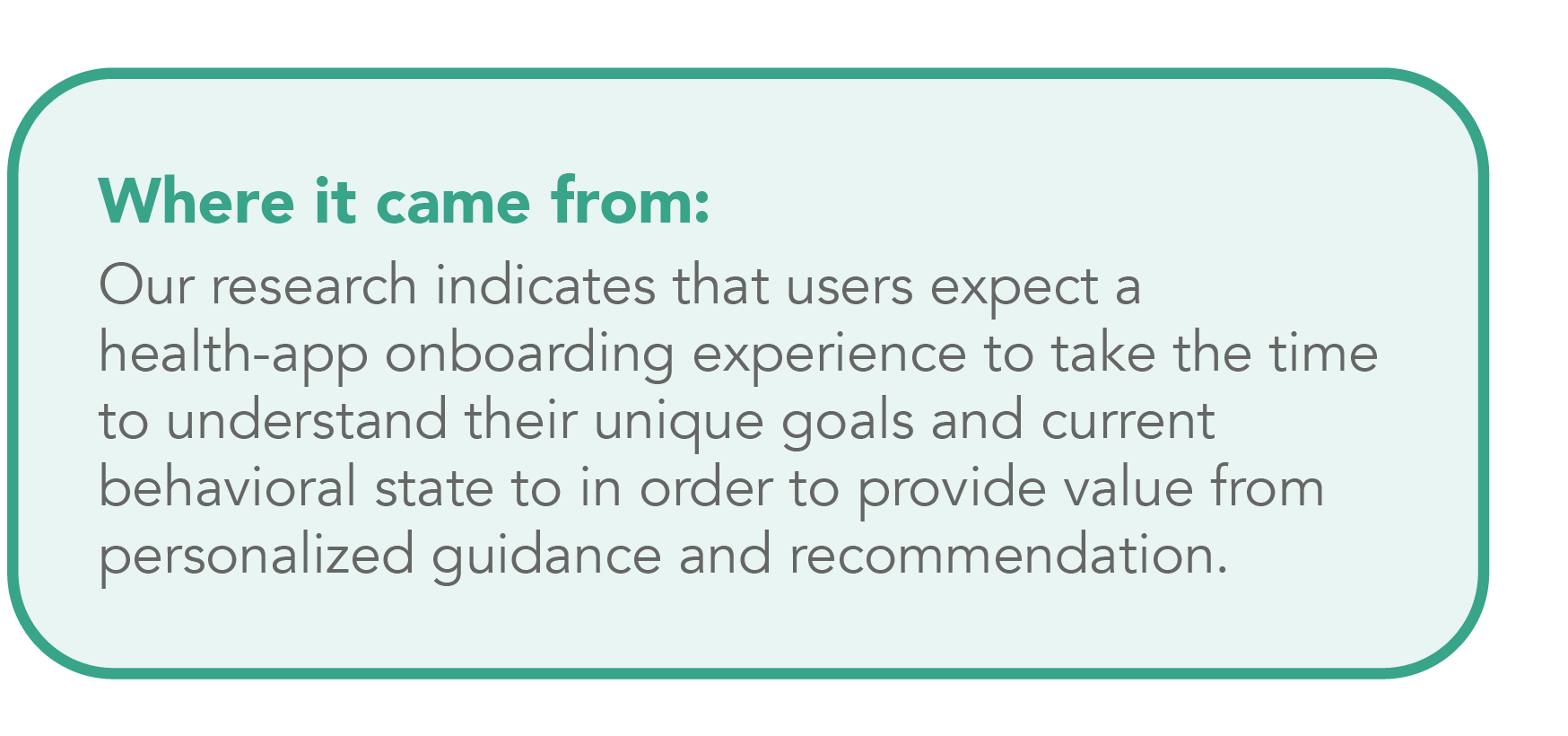
First time users learn how to use KP ME in a simple 2 step process that sheds light on the rationale and benefits behind each onboarding question. This data helps KP ME create a more relevant and tailored user experience.
On-boarding introduces KP ME-er’s to core behavior change concepts. Here they experience their first Pursuit, refine their health goals and log activities over the past 24 hours to help inform a baseline for their health journey
How it works:
A series of dynamic questions that respond to each user based on questions answered.
Visualization
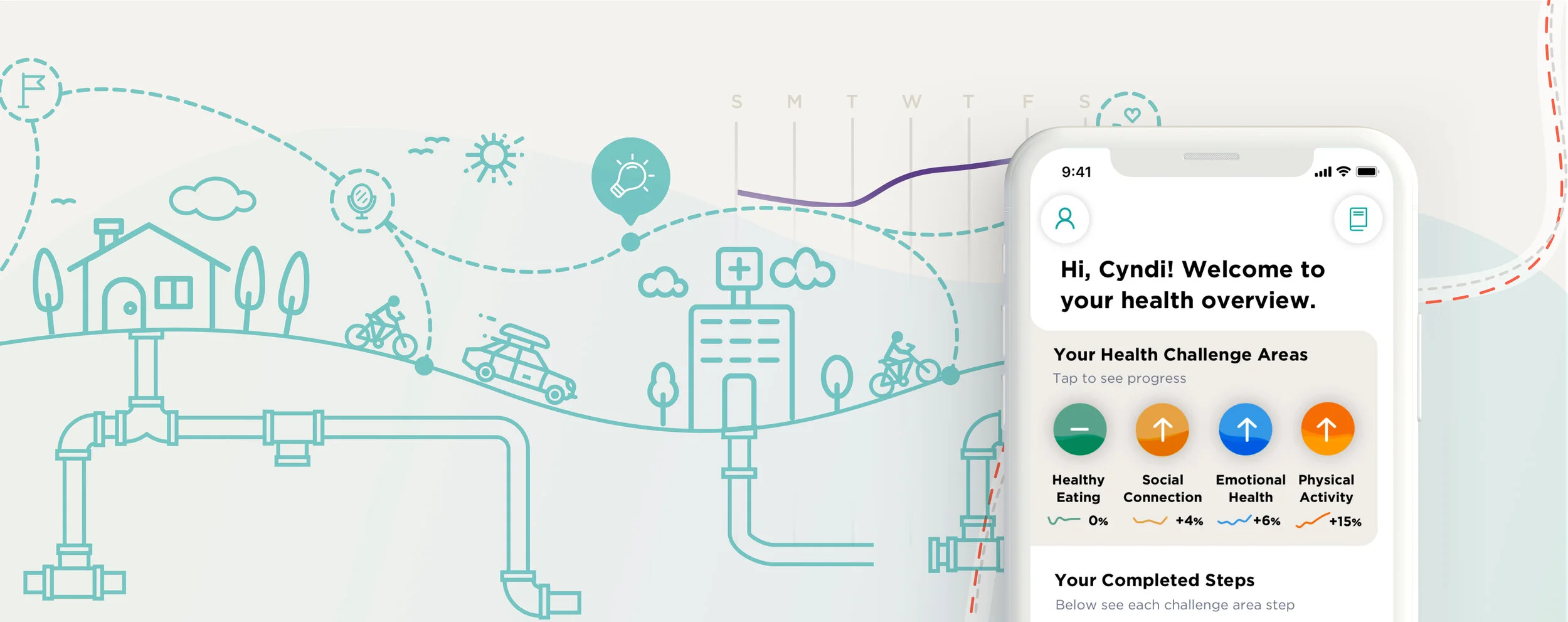
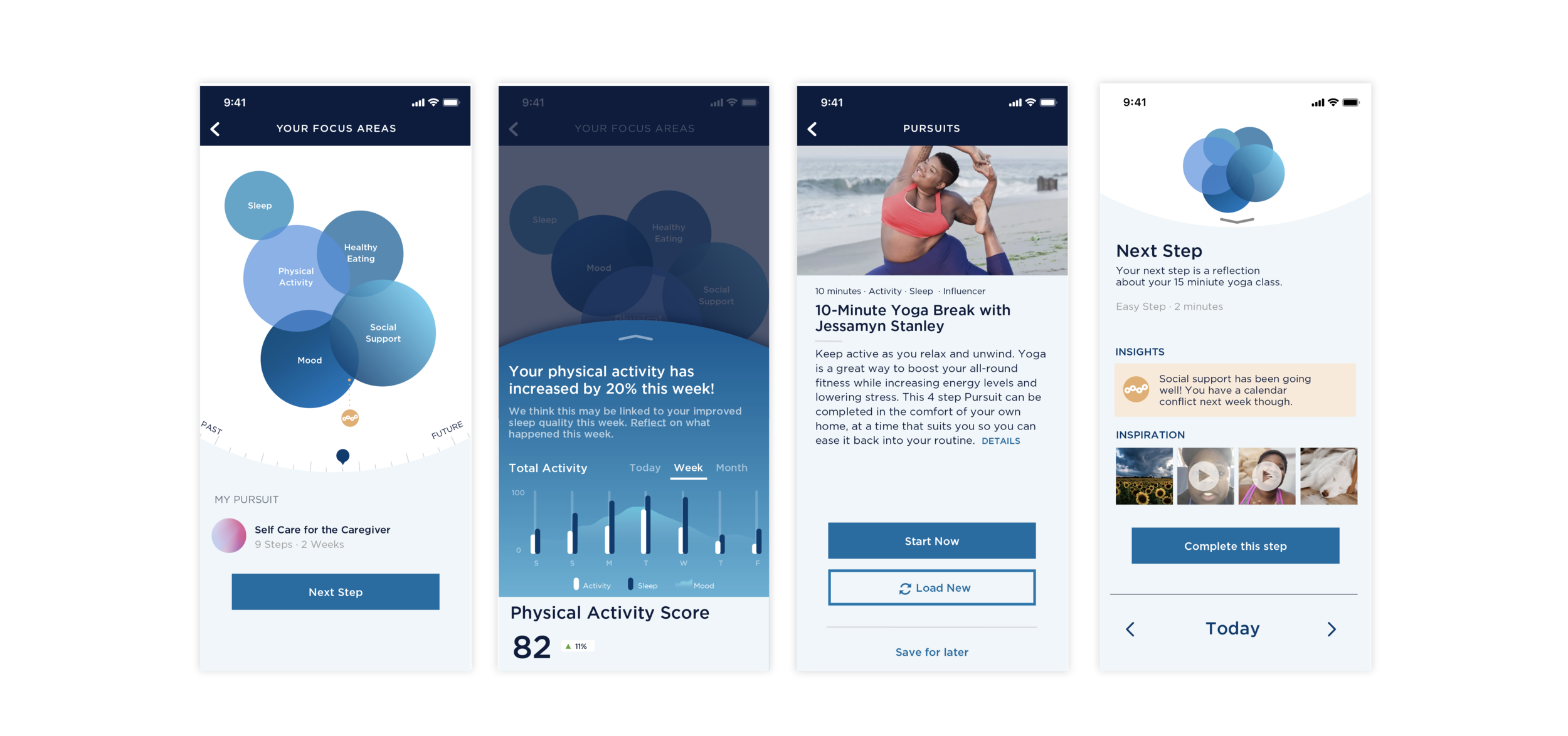
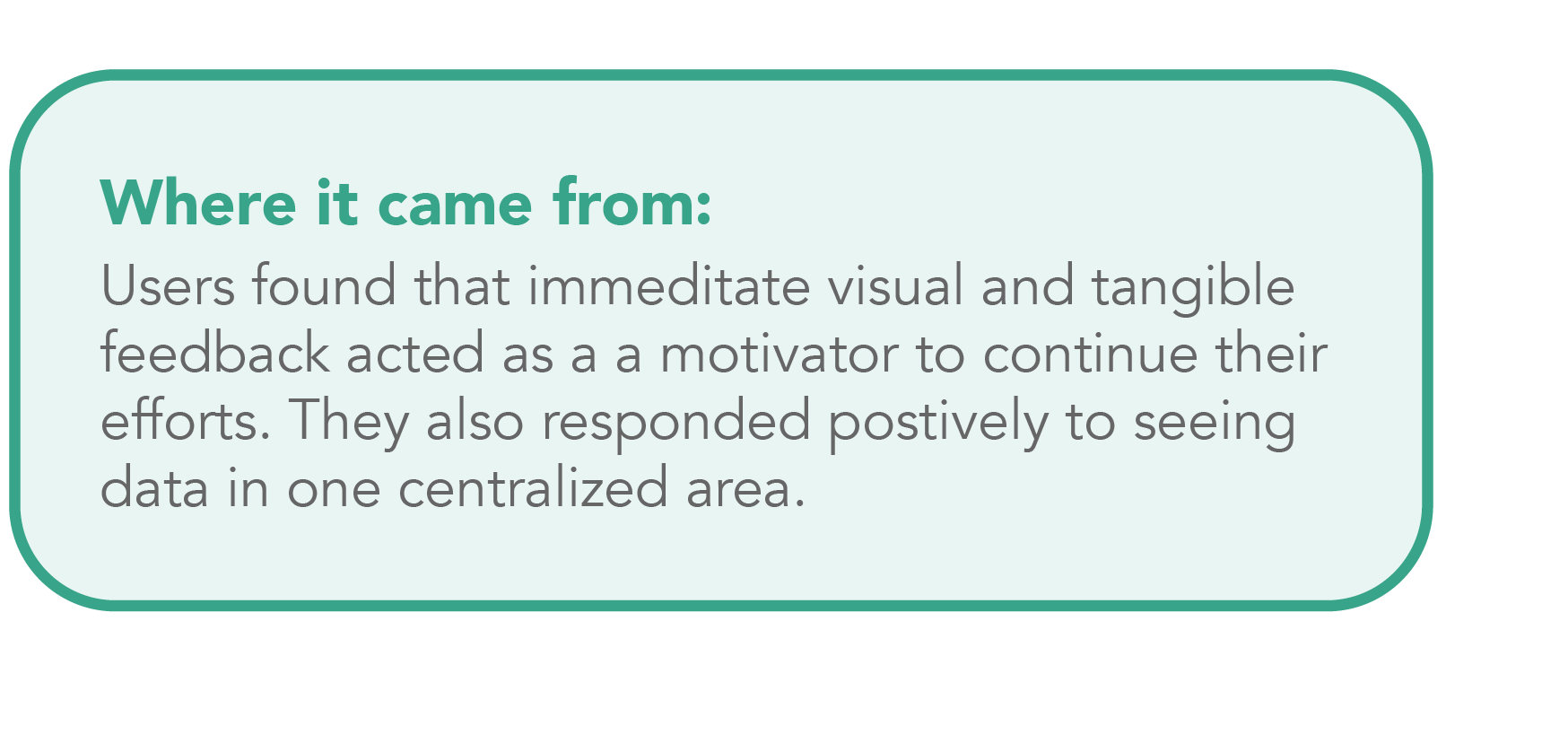
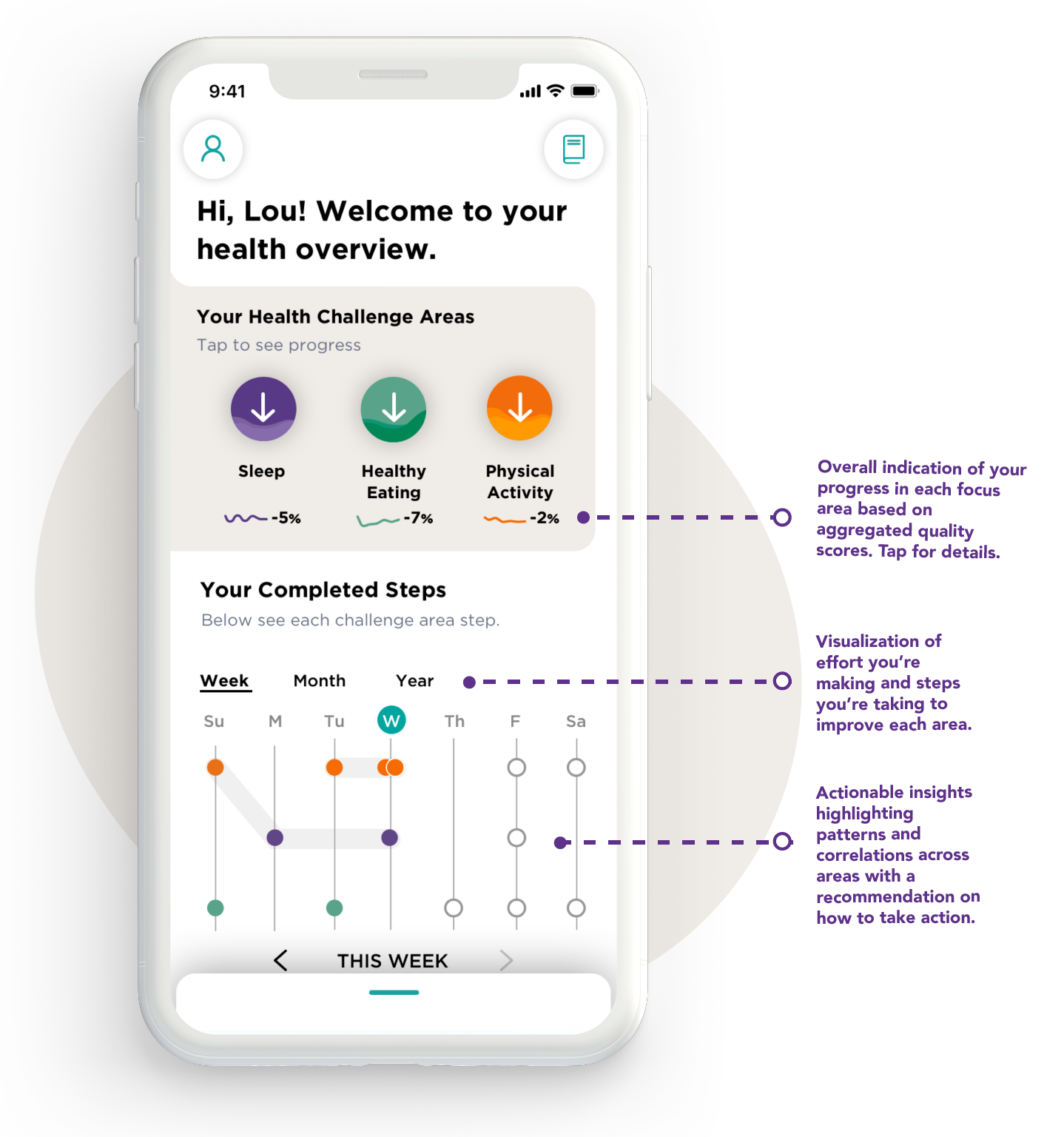
A snap-shot view of a user’s overall health based on their self identified challenge areas. Users can see a more detailed view of each challenge area in order to learn more about progress made.
This view gives users an at-a-glance look at how they are doing, celebrating progress over perfection by highlighting user actions while simultaneously encouraging continued effort.
How it works:
Impact is presented using a quality score/rating for each challenge area highlighting change over time.
Effort is displayed by the completed steps across each challenge area.
Reflections
Guiding insightful reflection related to personal wellness.
Prompted Reflections
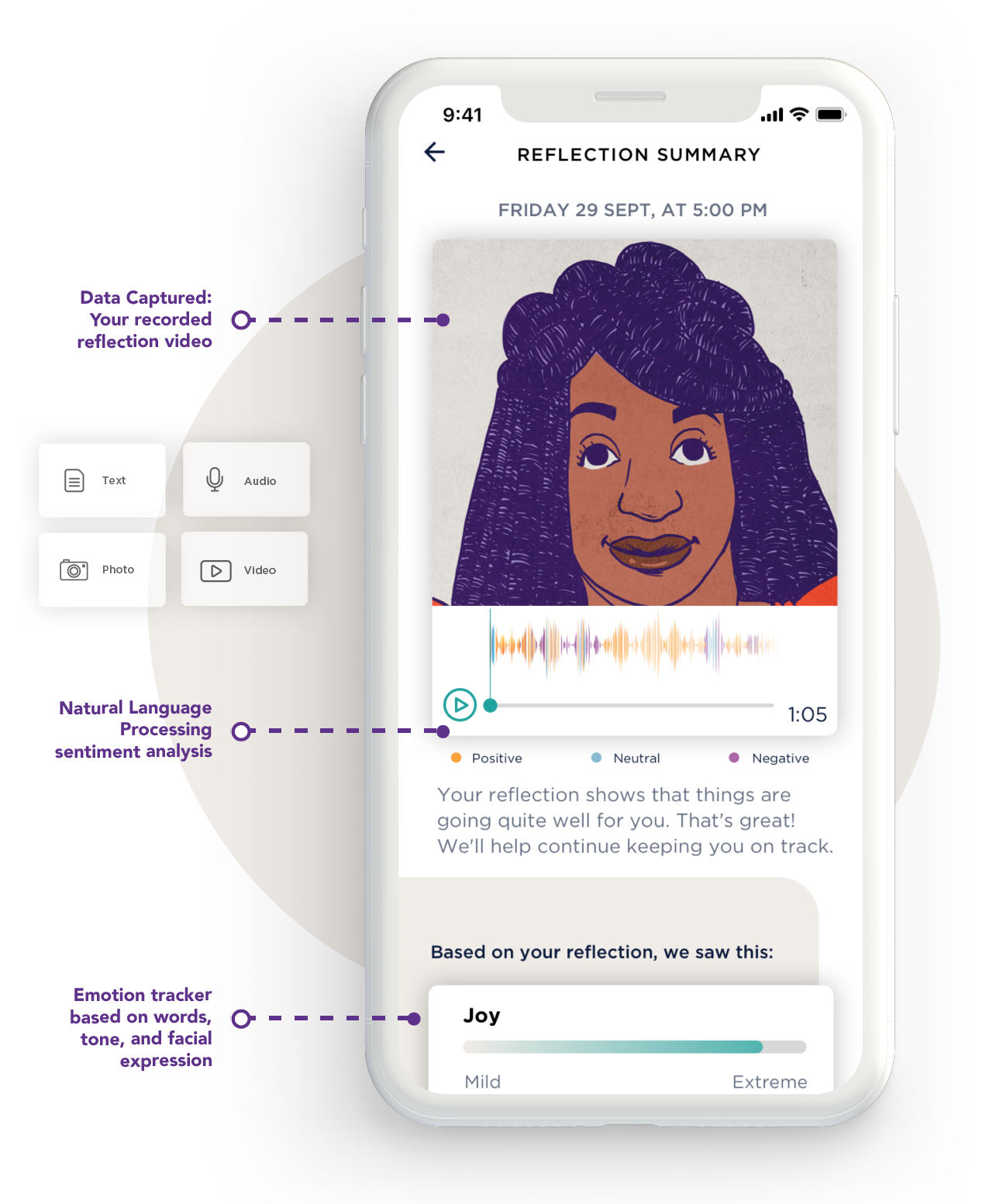
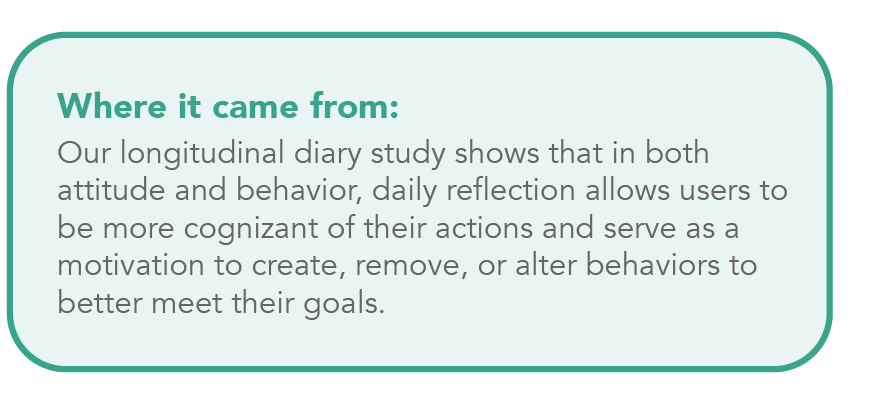
Prompted reflections ask users to reflect on their progress and past behaviors. These can be both heavily and loosely structured depending upon context.
Reflection helps users build self-awareness and independent problem solving skills by facilitating the identification of key barriers and motivations.
How it works:
Reflections analyzed to capture and provide feedback and insights.
Support
Providing the right kind of support, at the right time.
Motivational Nudges
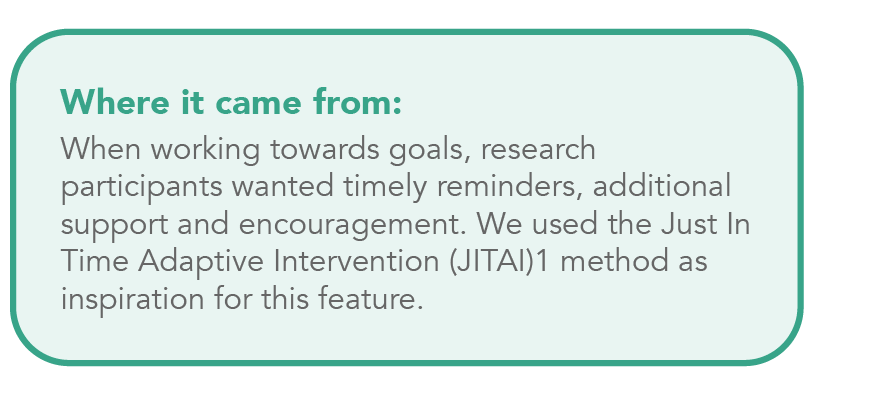
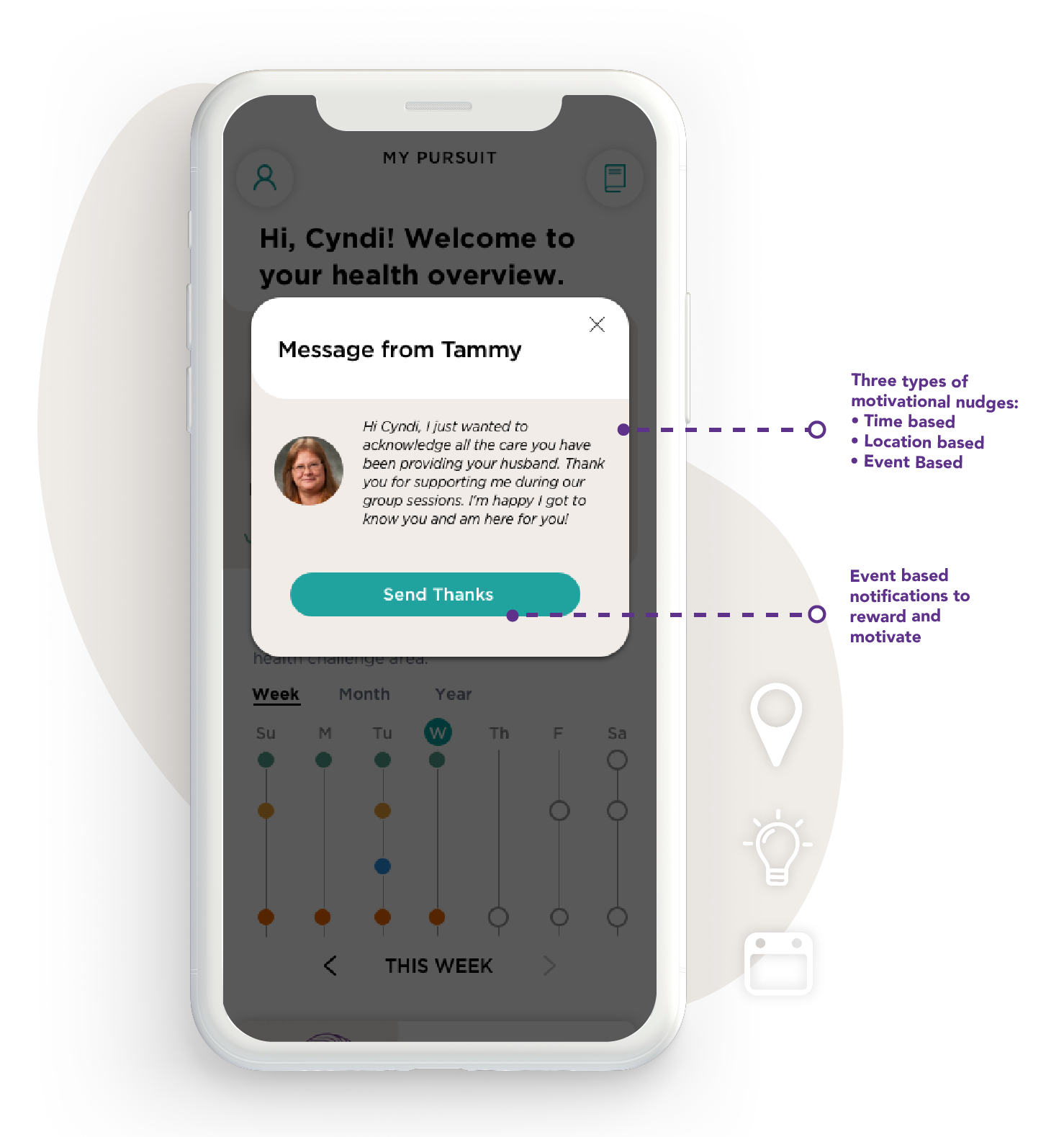
Motivational nudges are sent to users when they need them most and include surfacing past reflections, positive insights, messages of encouragement, or information and advice.
Designed to target micro-moments and adapted to address the unique and changing needs of individuals. Motivational nudges provide support and encouragement to keep KP ME-er’s on track toward their goals.
How it works:
As the system learns and understands users patterns, routines and context, it will be able to identify and trigger the right type of motivational nudge at the right time. A motivational nudge could surface a past reflection to provide support and encouragement, or can be a message from people in their support network etc.
Pursuits
Recommending short behavior change recipes, made up of small actionable steps.
Pursuits & Steps
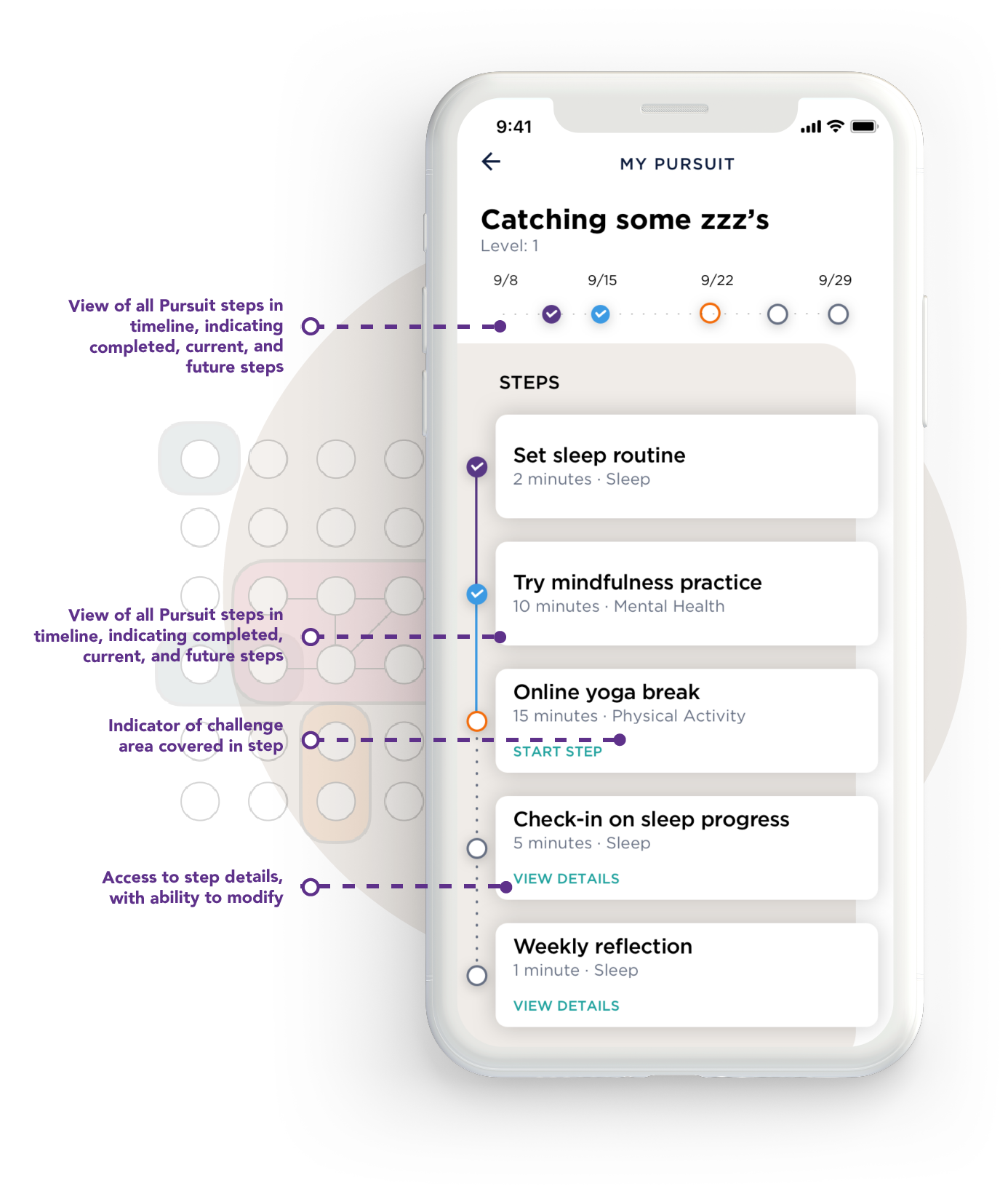
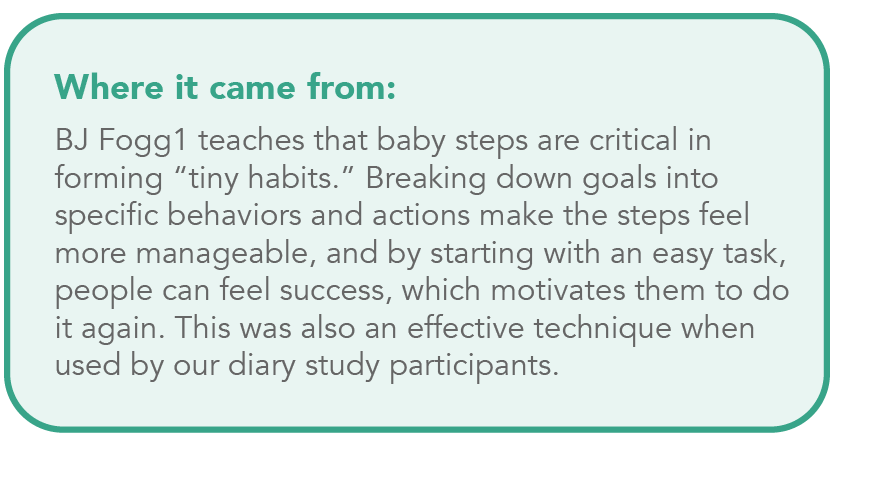
Pursuits are short term behavior change recipes made up of small actionable steps that focus on specific behavioral outcomes, designed to help KP ME-er’s reach their goals.
Pursuits will arm KP ME-er’s with the tools and support needed to achieve their goals by focusing on the development and sustainability of new healthy habits.
How it works:
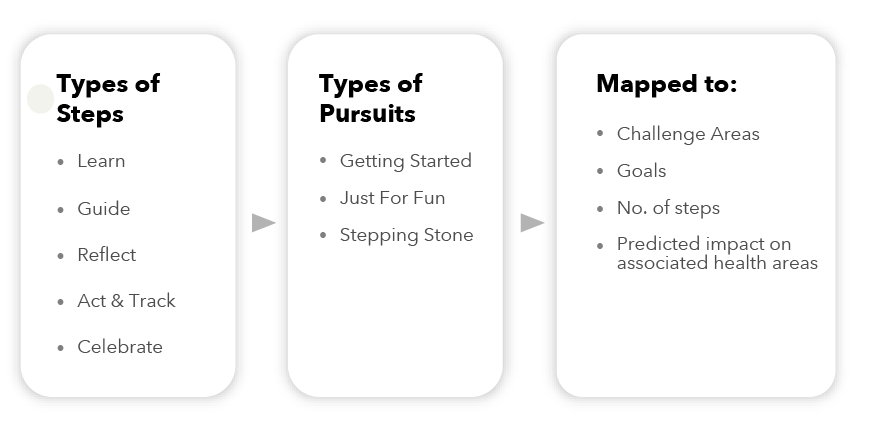
Steps within a Pursuit
Why it’s valuable (Starter)
Introduces new healthy behaviors and activities in a fun way with minimal commitment required.
Examples: Yoga in the park, Mindfulness 101, Virtual Dance Class
Just for Fun (Primer)
Introduces new self-assessment and learning methods and techniques used by health coaches.
Examples: Health Ecosystem, SMART Goal, 24 Hour Look-Back.
Stepping Stone
A guided recipe of steps tailor to help you reach your goal and slot your new behaviors into your daily routine.
Examples: Sleeping, Walking, Meal Prep
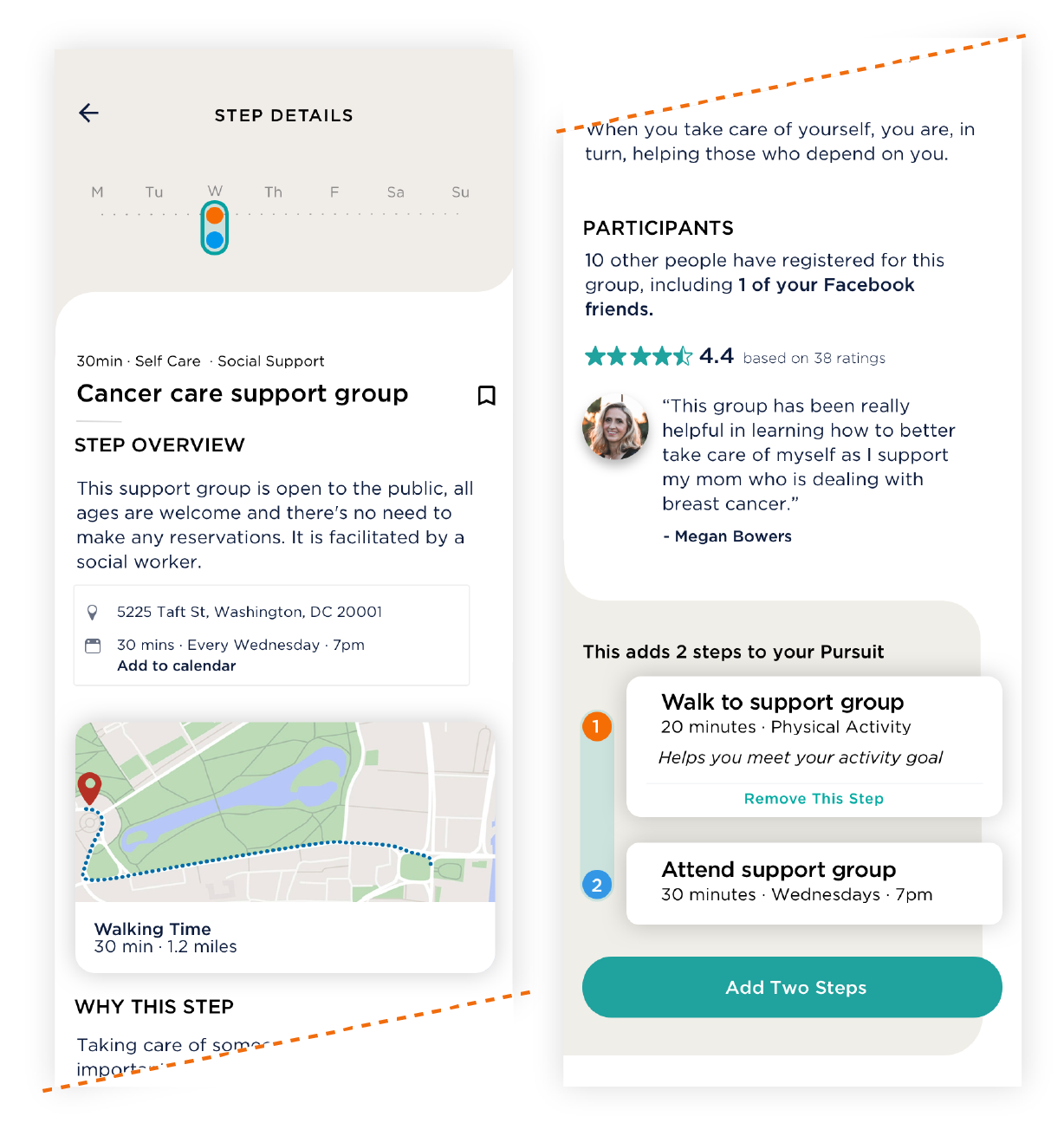
Healthy habits made simple
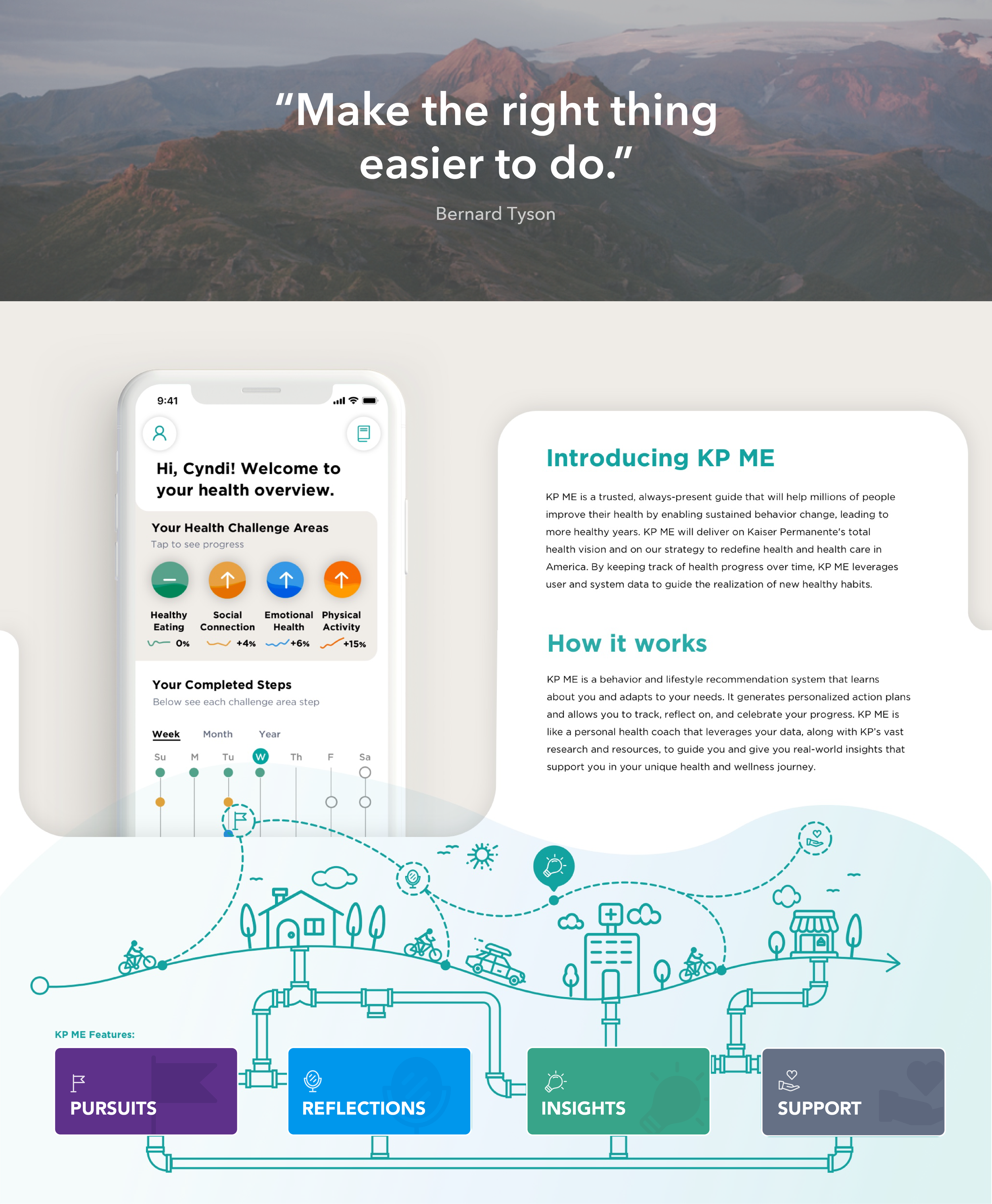
KP ME's smart data platform includes more than 25 features that help people translate abstract health goals into Pursuits, made up of a series of doable steps that build healthy habits.
With even a small amount of information, KP ME can immediately suggest several new Pursuits to incorporate into daily routines. The system gets smarter with use, serving up increasingly customized Pursuits.